












This is the third in a series of articles where we’ll be covering the Top Dystopian Films. Dystopian Films are primarily in the Sci-Fi genre and feature a future society with a totalitarian or authoritarian state, humans living in a world ravaged by environmental disasters and a general decline in societal structures. Dystopian futures are most often found in subgenres including Post-Apocalypse Films, Cyberpunk Films, Future Noir Films, Films About Artificial Intelligence, Films About Robots, Time Travel Films, Survival Dramas and Survival Horror Films.
This third article will cover the Top Dystopian Films You Haven’t Seen from the 1990’s and you can check out additional articles by decade below. We are also going to include a Best Of subgenre article as a grand finale. There are so many great films featuring a dystopian future from the last 60 years that we felt it best to break down some of the subgenre’s forgotten and lesser-known gems by decade before we give you the Best Of list which will likely feature many films you’ve already heard of or have seen.
- Top Dystopian Films You Haven’t Seen – 1970’s
- Top Dystopian Films You Haven’t Seen – 1980’s
- Top Dystopian Films You Haven’t Seen – 1990’s
- Top Dystopian Films You Haven’t Seen – 2000’s
- Top Dystopian Films You Haven’t Seen – 2010’s
- Top Recent Dystopian Films
- Best Dystopian Films
In the 1990’s, Post-Apocalypse Films gave way to the growing wave of Cyberpunk Films. Though Cyberpunk often included post-Apocalyptic elements, the main focus of Cyberpunk included Dystopian societies controlled by totalitarian governments or mega corporations and the ‘high tech, low life’ theme that would become synonymous with Cyberpunk. Other Dystopian themes of the decade included the loss of civil liberties, depictions of prisons controlled by totalitarian or authoritarian governments and Dystopian societies dealing with out-of-control crime.



Cyberpunk Films grew at an astronomical pace in the 1990’s to become one of the most popular Sci-Fi subgenres of the decade. Many of these films featured Dystopian life in the future including Hardware (1990), RoboCop 2 (1990), Freejack (1992), Fortress (1992), Tank Girl (1995), Johnny Mnemonic (1995), Judge Dredd (1995), Dark City (1998) and The Matrix (1999).
Totalitarian or Authoritarian governments in a Dystopian society often involve the loss of civil liberties or controlling the quality of life of its populace. Many of these subthemes of Dystopian societies were explored in various films throughout the decade. The Handmaid’s Tale (1990) featured a population that has gone sterile and results in the loss of women’s bodily autonomy. Freejack (1992) involved a Dystopian society where quality of life has plummeted due to environmental pollution and drug use. An alternate reality where a Dystopian government monitors the weight of an individual and sponsors a lottery where humans are hunted by their neighbors was the theme of Tempting Fate (1998). A loss of privacy in the form of a futuristic reality-TV show was the premise of The Truman Show (1998). And Furia (1999) was an obscure film where the futuristic government bans artistic expression.
Incarceration of political prisoners or enemies of the state is a popular theme of Dystopian societies and there was no shortage of 1990’s subgenre films utilizing this theme as a major element of their narrative. Wedlock (1991) featured an experimental prison where inmates wear exploding collars. An illegal pregnancy puts a man and his wife in a private, computer-controlled prison in Fortress (1992). No Escape (1994) places the most violent and troublesome inmates on a secret jungle island (where multiple themes of totalitarianism and authoritarianism are explored within the government and the island’s prisoners). And Snake Plissken would return in Escape from L.A. (1996) where Los Angeles has become an island and penal colony for those found guilty of moral crimes.
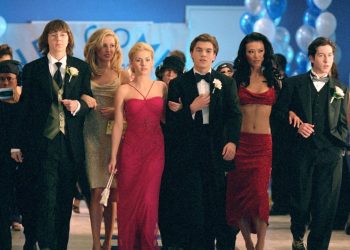
Crime is another hallmark of Dystopian films and the 1990’s showed various depictions of future crime-ridden societies. Class of 1999 (1990) featured deadly robotic teachers implemented in a school to control unruly youth. A mega corporation involved in a conspiracy to control a crime-ridden city was the main theme of RoboCop 2 (1990). Shopping (1994) was notable as Jude Law’s first major film and involved a future society where British teenagers lead lives of crime. And Judge Dredd (1995) was based on the comic book character who is judge, jury and executioner of criminals in a Dystopian world.
Our complete list of Dystopian Films features over 220+ films from 1965 – 2023. This collection features Dystopian futures with totalitarian governments, worlds ruled by mega corporations, post-apocalyptic worlds due to war or environmental disasters and general societal decline. If you don’t see a film in our collection, it is likely in other collections such as Post-Apocalyptic Films, Virus & Pandemic Films, Cyberpunk Films and Survival Dramas. Also, as we’re always updating our collections and will be releasing additional articles of great Dystopian Films, subscribe to our newsletter for our latest updates as we post them.
Classic Dystopian Films from the 1990’s: Hardware (1990), The Handmaid’s Tale (1990), RoboCop 2 (1990), The City of Lost Children (1995), 12 Monkeys (1995), Dark City (1998), The Truman Show (1998) and The Matrix (1999).
Lesser-known Dystopian Films from the 1990’s that didn’t make our list: Closet Land (1991), Kafka (1991), Shopping (1994), Barb Wire (1996), The Postman (1999) and Sunset Heights (1999).
Note: We are a participant in the Amazon Services LLC Associates Program, an affiliate advertising program designed to provide a means for us to earn fees by linking to Amazon.com and affiliated sites.
Here is our list of the Top Dystopian Films from the 1990’s:
#10
Furia

Plot: In a desert town, sometime in the future, a repressive government regime restricts all forms of artistic expression. At night, Theo breaks the law, risking torture and death, to paint his work on public spaces. But when his lover Elia is arrested for committing the same crime, Theo allows himself to be captured hoping to somehow be reunited with her.
KBZ’s Take: Fans of Director Alexandre Aja might want to check this film out. This was Aja’s first film and was followed by some of his more notable efforts including High Tension (2003), Horns (2013) and Crawl (2019).
While the film is a low budget offering that focuses on freedom of expression, it’s Marion Cotillard who steals every scene she’s in. This was one of her first films and it’s readily apparent watching this film how she would go on to become an international star appearing in high-profile films such as Big Fish (2003), Inception (2010) and The Dark Knight Rises (2012).
Where to Stream / Buy: https://amzn.to/3pm5V8e

Plot: Grieving doctor Ben Creed is transported into a parallel world in the hope of reuniting with Melody, the woman he loved and lost; when he discovers that this world has different rules, he finds himself unable to leave.
KBZ’s Take: Tempting Fate is a forgotten TV movie from the late 90’s. Though it is a lower budget B-movie it has a very interesting premise and some great concepts involving parallel worlds.
The film doesn’t waste time on the scientific reality of traveling to the parallel world and focuses much more on the differences in the alternate world. While most of these changes seem benign at first (i.e. everybody is nice and there are no overweight people), there’s a surprising ‘twist’ halfway through the film showing the dark side to this alternate, dystopian world.
Additional Lists: Top Films About the Multiverse You Haven’t Seen #9
Where to Stream / Buy: https://amzn.to/40wb8XM
#8
Tykho Moon

Plot: Assassins stalk the streets of a moon colony, hunting for an organ donor who is a perfect match for their diseased dictator.
KBZ’s Take: Though this French film is a visual treat to watch, the film suffers a bit from a confusing plot and some very cliché subgenre scenarios. However, the film also features some great French actors in the film – most notably Julie Delpy.
If you are a fan of Director Enki Bilal’s previous Dystopian film, Bunker Palace Hotel (1989), or other French Dystopian fare like The City of Lost Children (1995), then you definitely should not miss this film. For general fans of the subgenre, it’s worth checking out but more as a curiosity with a unique subgenre setting and plot.
Where to Stream / Buy: https://archive.org/details/ZZZZBilalEnki1996TykhoMoon
#7
Tank Girl
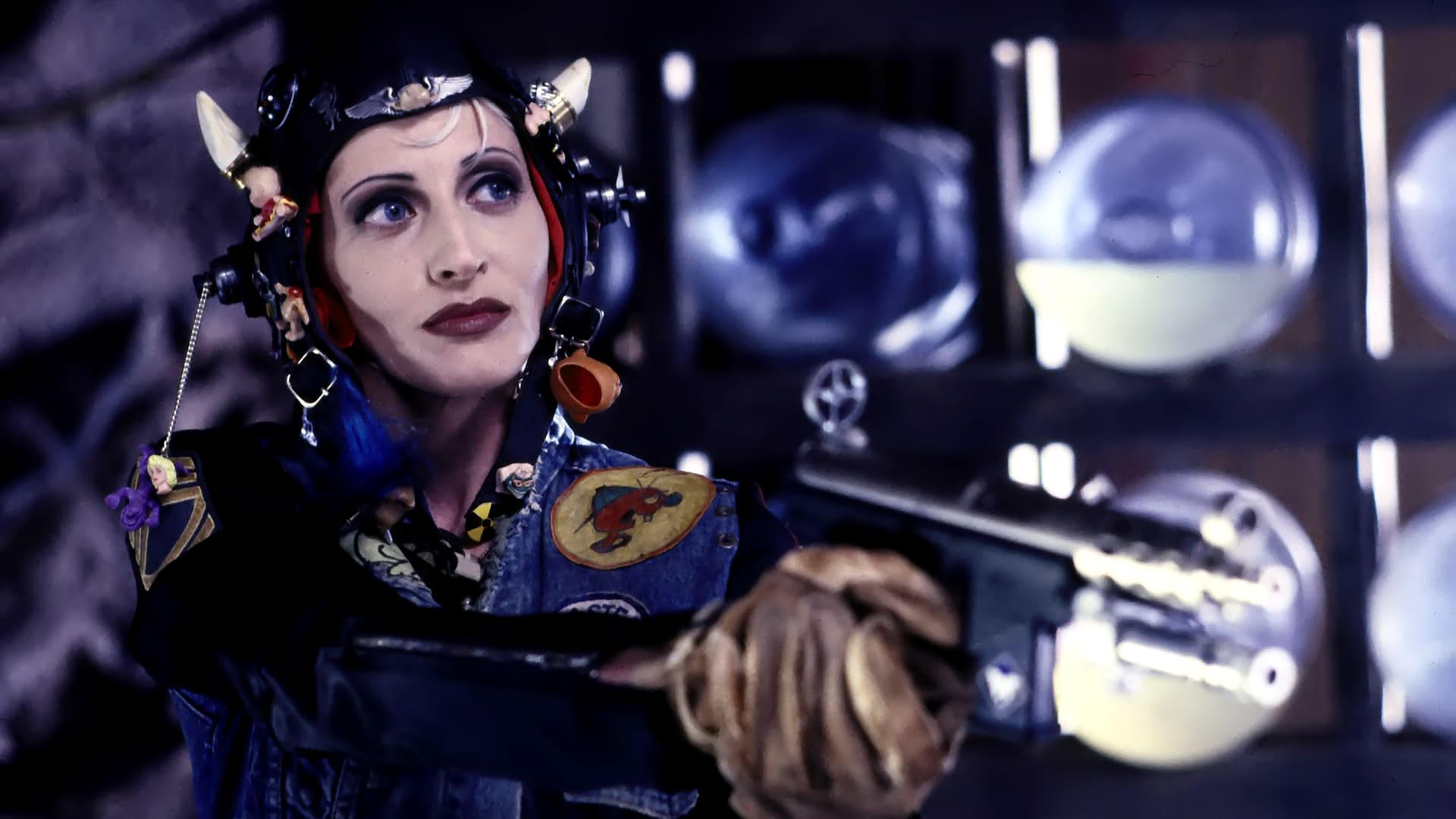
Plot: Based on the British cult comic-strip, our tank-riding anti-heroine fights a mega-corporation, which controls the world’s water supply.
KBZ’s Take: The film has a very dividing line between lovers and haters. The haters will point to how bad the film is. The lovers will point to how the film is so bad it’s good. Regardless of where you sit, though the film was a box office bomb upon release, it has developed into a cult classic.
Tank Girl can best be summed up as The Road Warrior (1981) mashed up with punk, comedy and mutant kangaroo hipsters. If that sounds like your cup of tea, then you should give this crazy Dystopian post-Apocalyptic ride a try.
Where to Stream / Buy: https://amzn.to/3XsodRZ
#6
Wedlock
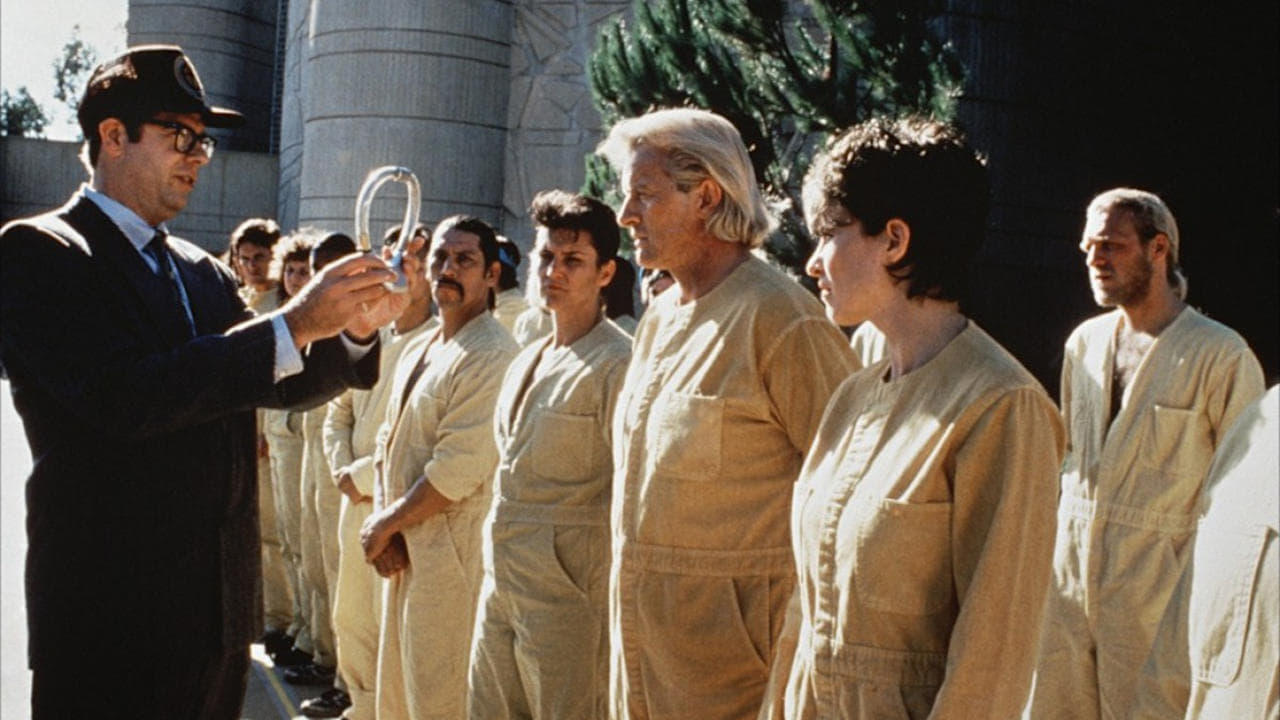
Plot: A male prison escapee heads for his hidden loot, electronically attached to a female prisoner.
KBZ’s Take: Also known as Deadlock, this was an HBO film from the early 1990’s. Unlike other subgenre films, this film had a unique premise – male and female convicts are paired with electronic collars that will explode if one of the paired partners gets separated by more than 100 yards.
As you might imagine, Frank (Rutger Hauer) and his partner Tracy (Mimi Rogers) escape the prison in search of Frank’s hidden loot. The film’s unique premise adds some fun to the usual Fugitive Film tropes and elevates it above mid-tier subgenre fare.
Additional Lists: Top Films About Fugitives You Haven’t Seen – 1990’s #7
Where to Stream / Buy: https://youtu.be/GovciP_RolU
#5
Fortress

Plot In the future, the inmates of a private underground prison are computer-controlled with cameras, dream readers, and devices that can cause pain or death. John (Christopher Lambert) and his illegally pregnant wife Karen (Loryn Locklin) are locked inside The Fortress but are determined to escape before the birth of their baby.
KBZ’s Take: Though Fortress was released in 1992, it seems almost prescient with its themes of corporate controlled private prisons run by AI. Even the introductory video to the prison that John Brennick (Christopher Lambert) watches upon entry appears closer to reality than Sci-Fi.
As for the film, it has some good action sequences, but the plot suffers as the film progresses. Fortress does have some very interesting Dystopian themes and can be fun to watch if you don’t go into it expecting a groundbreaking film of the subgenre.
Where to Stream / Buy: https://amzn.to/3prbCli
#4
Freejack

Plot: Time-traveling bounty hunters find a doomed race-car driver in the past and bring him to 2009 New York, where his mind will be replaced with that of a terminally ill billionaire.
KBZ’s Take: We’re ranking this film higher than it should probably be mostly due to its Time Travel concepts attached to a Dystopian future. It has some fun elements in the film like “Bonejackers” who are the time traveling bounty hunters and “Freejacks” who are the bounties from the past – turned fugitives in the future.
The film had a troubled production and the A-list cast of the time (Anthony Hopkins, Emilio Estevez, Renee Russo, etc.) has mostly disowned the film. However, it’s a fun film if you can turn your mind off before viewing and not think too much about the numerous plot holes.
Additional Lists: Top Time Travel Films You Haven’t Seen – 1990’s #4
Where to Stream / Buy: https://amzn.to/3hTJHXC
#3
No Escape

Plot: In the year 2022, a ruthless prison warden has created the ultimate solution for his most troublesome and violent inmates: Absolom, a secret jungle island where prisoners are abandoned and left to die. But Marine Captain John Robbins, convicted of murdering a commanding officer, is determined to escape the island in order to reveal the truth behind his murderous actions and clear his name.
KBZ’s Take: No Escape is another film of the subgenre that features a Dystopian theme of prisons run by corporations. Unlike Fortress (1992), this film explores multiple themes of the subgenre.
On its surface, the film focuses on the Dystopian notion of the ‘surveillance state’ as the corporation watches over the island’s prisoners and can control their actions. The island itself and the situations that occur there are also kept secret by the corporation from the general populace.
On the island, the film also explores themes of a Utopian vs. Dystopian society. John Robbins (Ray Liotta) first interacts with the villain Walter Marek (Stuart Wilson) and his Outsiders’ authoritarian rule over a segment of the island’s population. This is in contrast to Robbins’ eventual journey to the Insiders camp led by The Father (Lance Henriksen) who live their life by the rule of law.
No Escape is one of the better films of the subgenre that layers its many action sequences over foundational Dystopian themes.
Where to Stream / Buy: https://amzn.to/3Nuy5WV
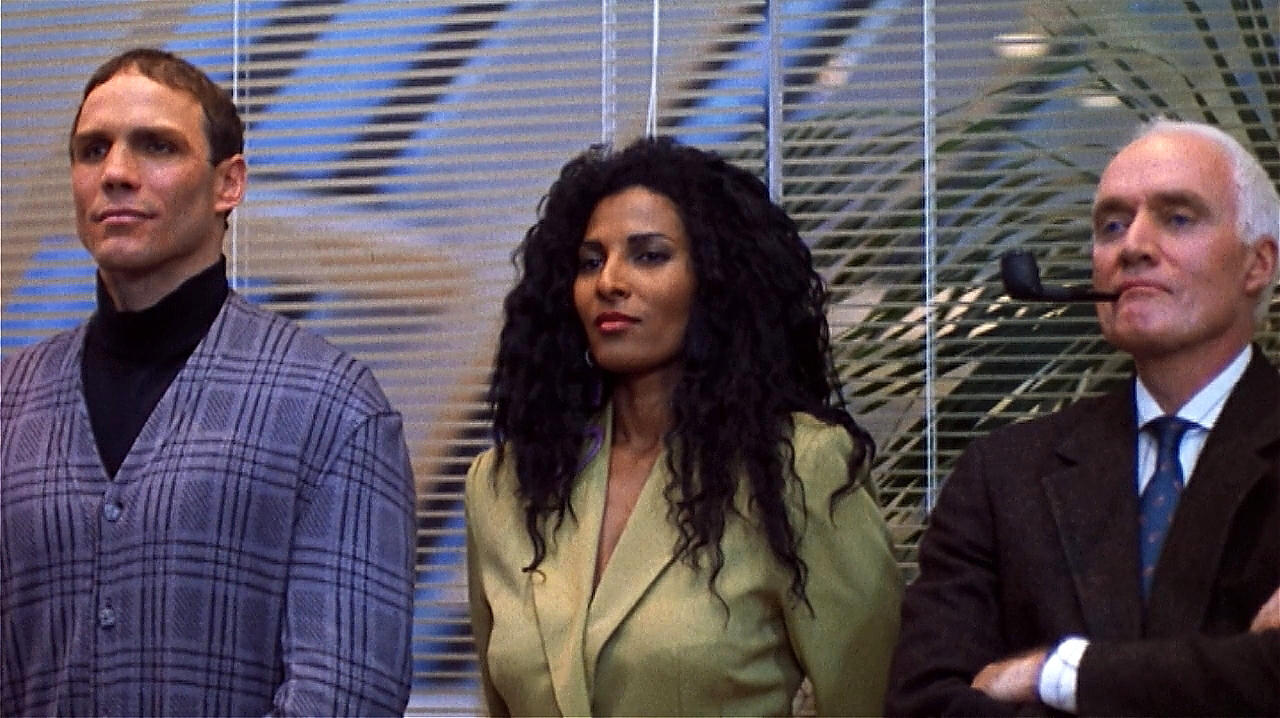
Plot: A principal assigns cyborg teachers to keep the peace at Kennedy High School, but the students must unite when this backfires.
KBZ’s Take: This is the sequel to Class of 1984 (1982) and it explores many of the same themes as its predecessor – rising crime and a generation of youth involved with gang activity. Where the first film focuses on a Dystopian theme of order vs. chaos, its sequel is more entrenched in government control through military robots.
Unlike the first film which was raw, violent and pessimistic about the future, Class of 1999, though also very violent, is a satire of the education system. Many scenes in the film satirize the lengths government and educators will employ for control – even at the expense of becoming the ‘bad guy’.
While the film hasn’t aged well, it has developed into a cult classic and is one of the better B-films of the subgenre.
Where to Stream / Buy: https://amzn.to/3r5925a

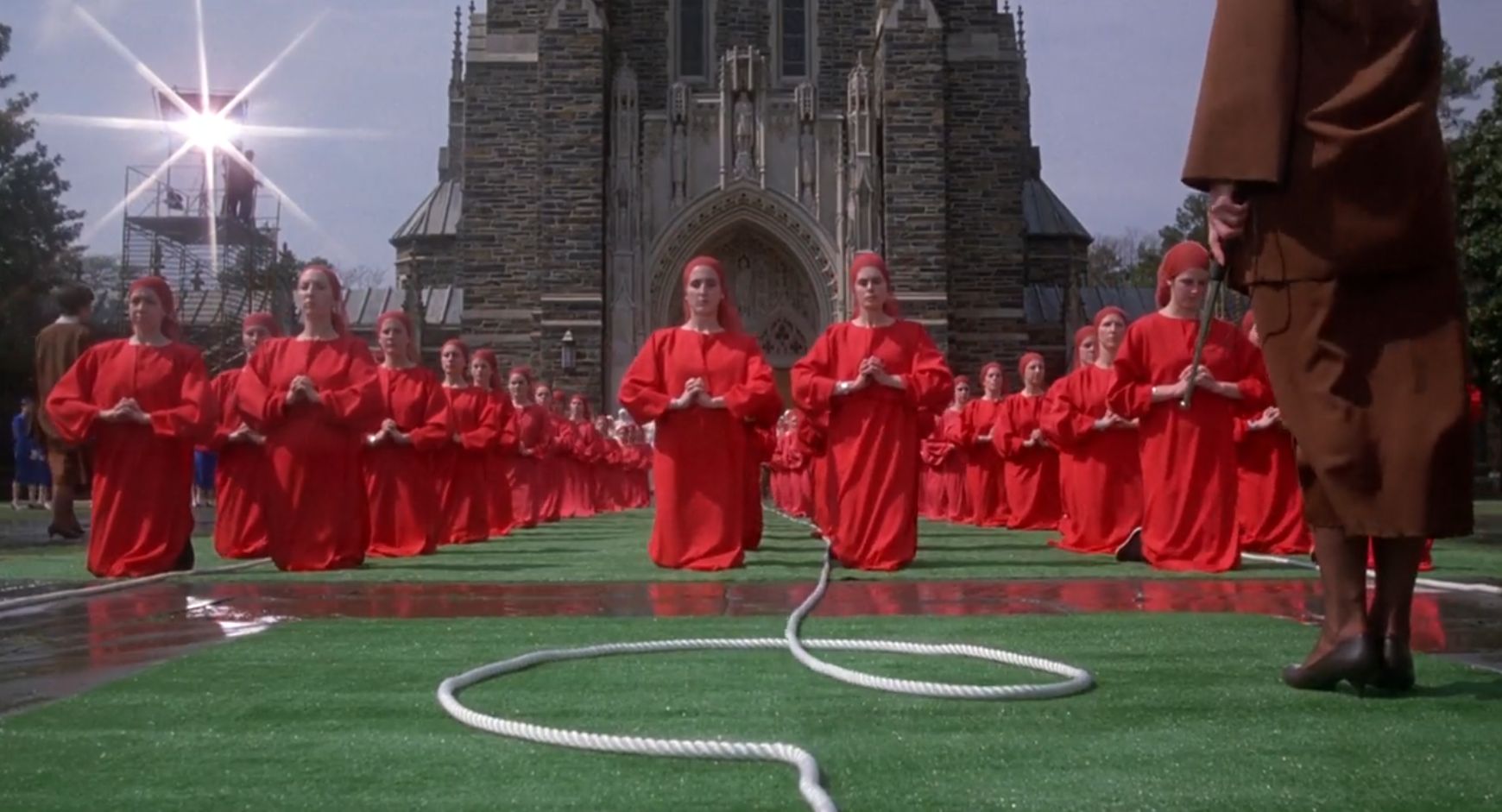
Plot: In a futuristic, theocratic and dystopian United States, Offred (Natasha Richardson) is forced to become a handmaid — a sexual slave that serves as a surrogate for couples who desire children but who are unable to have them themselves. She works for the cold Serena (Faye Dunaway) and her cruel husband, the commander (Robert Duvall). Offred is in love with the commander’s chauffeur Nick (Aidan Quinn) and must find a way to bear a child before she is shipped off to the wastelands.
KBZ’s Take: We’re listing this film here because of its timeliness and that it explores themes of extreme Dystopian governments. While the film is not as good as the novel it is based on or as in-depth as the television series, it does encapsulate the major elements from the source material and the horrors of Gilead.
The film touches on themes of a totalitarian state, the loss of bodily autonomy, the surveillance state and other elements of classic Dystopia. The cast of Natasha Richardson, Robert Duvall, Faye Dunaway and Aidan Quinn are also excellent in the film – especially Richardson and Duvall. It’s their scenes together that help explain how Gilead came to be and the eventual hypocrisies rife within this ‘moral’ totalitarian government.
Though the film’s subject matter is controversial (dependent on your political leanings), it’s still a classic look at unique Dystopian themes.
Where to Stream / Buy: https://amzn.to/3JvD0FL