















AR (Augmented Reality) and VR (Virtual Reality) films are typically included in an umbrella term called XR (Extended Reality). XR usually refers to technologies such as AR, VR, MR (Mixed Reality) and HCI (Human Computer Interface). As XR isn’t well-known outside of technology circles, films that feature these various technologies often refer to them only as AR & VR as those technologies (and terms) are more popular with the general public.
Though AR & VR films are usually coupled together, most films only focus on one singular technology as they’re quite different in practice. If you’re not familiar with these technologies, we have included a brief synopsis with film examples below. Feel free to skip these four sections if you are already familiar with XR technologies and how they’re shown in films.
AR films will show advanced computer interfaces where visual ‘augmented’ information is viewable to the naked eye or in a HUD (Heads Up Display). They Live (1988) and Iron Man (2008) are the most popular examples of AR in film. AR is represented in They Live by the glasses Nada (Roddy Piper) wears where he can see the subliminal messages (and aliens) in the world around him. In Iron Man, when Tony Stark (Robert Downey, Jr.) wears the Iron Man suit, he is often show looking through a HUD with augmented information displayed in front of him.



VR films often show a person wearing a VR helmet or device where they then interact in a virtual world. The Matrix (1999) and Ready Player One (2018) are the most popular examples of VR in film. The Matrix has multiple layers of VR in its narrative but the most basic form of VR is when Neo (Keanu Reeves) ‘jacks in’ via device to the virtual world of The Matrix. And Ready Player One features advanced VR concepts with Wade Watts (Tye Sheridan) using the film’s virtual reality simulation, OASIS.
MR films often overlap with AR films but feature a key difference. MR or Mixed Reality is a combination of augmented information viewable by the user who can also use gestures and movement to interact with the displayed visual information around them. Minority Report (2002) is the best example of MR in film when John Anderton (Tom Cruise) is wearing specialized gloves and interacting with a display. Sleep Dealer (2008) is another example of how MR technology could conceptually be used in the future for remote manual labor.
And though HCI often refers to a general concept of how humans interact with computers, in film, HCI is often more conceptually based with a device that interacts directly with the human brain. Brainstorm (1983) was one of the first films to show how an HCI could record sensations from a person’s brain that others could experience in a VR-type simulation. And Strange Days (1995) took this similar HCI concept even further with the film’s SQUID technology (Superconducting Quantum Interference Device).
AR & VR films do have their own subgenre and a few of the subgenre’s films focus entirely on AR or VR technology. However, most subgenre films show AR & VR technology as part of another subgenre – almost always Sci-Fi. Other Sci-Fi subgenres that also include AR & VR include Alien Invasion Films, BioTech Films, Cyberpunk Films, Hard Sci-Fi Films, Military Sci-Fi Films, Films About Robots, Films About AI, Films Set in Space and Techno Thriller Films.
What are the Best AR &VR Films? Read on as we look at some of the most popular films featuring futuristic XR technologies from the last 50 years. This is our ninth “Best Of” subgenre list where we will rank the Top 20 films of the AR & VR Films subgenre.
For our rankings, we had to use some simple criteria that defines an XR film. First, the film must show some form of AR, VR, MR or HCI in the film.
Second, films that incorporate AR, VR, MR or HCI as major part of their narrative or plot will have priority ranking. This will affect a film such as Total Recall (2012) that features some great AR concepts, but the film is not about AR or any XR technology.
Third, priority ranking will also be given to films that have a realistic portrayal of these technologies. There are a few subgenre films that show some advanced conceptual applications of XR technology that look great in film but aren’t feasible anytime in the near future or aren’t practical for use in the real world.
And fourth, we had to follow our rule for all of KBZ’s film listings where we only list films that have a 4.0/10 or higher rating. We’ll also be focusing on films from 1970 to the present.
Our complete list of Sci-Fi AR & VR Films features over 65+ films from 1973 – 2023. You can find just about every film featuring XR technologies in this collection and for lesser-knowns subgenre films, we also have a list of the Top Films About Augmented Reality & Virtual Reality You Haven’t Seen. We’ll be releasing a follow-up list soon of more lesser-known AR & VR films as some very good additional films have been released since our initial article.
The Best AR & VR Films
Honorable Mentions: World on a Wire (1973), Disclosure (1994), Evolver (1995), Virtuosity (1995), Nirvana (1997), Menno’s Mind (1997), Let’s Be Evil (2017), Marjorie Prime (2017), OtherLife (2017) and You Die (2018).
Rank 20-1:
#20 Avalon (2001) Where to Stream / Buy: https://amzn.to/3GW20oj
#19 Total Recall (2012) Where to Stream / Buy: https://amzn.to/3N4dFFg
#18 Source Code (2011) Where to Stream / Buy: https://amzn.to/3oig1WO
#17 Auggie (2021) Where to Stream / Buy: https://amzn.to/41l4LI5
#16 Bliss (2021) Where to Stream / Buy: https://amzn.to/41jbG4k
#15 Ghost in the Shell (1995) Where to Stream / Buy: https://amzn.to/40rYFEd
#14 The Thirteenth Floor (1999) Where to Stream / Buy: https://amzn.to/43Oc9Ny
#13 Blade Runner 2049 (2017) Where to Stream / Buy: https://youtu.be/Icx4xul9LEE
#12 Brainstorm (1983) Where to Stream / Buy: https://amzn.to/41xjJua
#11 eXistenZ (1999) Where to Stream / Buy: https://amzn.to/40lZ2jK
#10
Videodrome

Plot: As the president of a trashy TV channel, Max Renn is desperate for new programming to attract viewers. When he happens upon Videodrome, a TV show dedicated to gratuitous torture and punishment, Max sees a potential hit and broadcasts the show on his channel. However, after his girlfriend auditions for the show and never returns, Max investigates the truth behind Videodrome and discovers that the graphic violence may not be as fake as he thought.
XR Technology: VR
KBZ’s Take: Videodrome is one of David Cronenberg’s most underrated film and arguably the best film of the entire Body Horror subgenre. Videodrome is not a film that will be fully understood or appreciated on a single viewing. It takes multiple viewings to understand the layers Cronenberg has created within the film from the Videodrome ‘conspiracy’ to the mutations of the human body.
The concept of Videodrome is also based on one of the earliest examples of Virtual Reality. When Max Renn (James Woods) first tries on the VR headset, the viewer is placed in Max’s new ‘virtual’ reality and the slowly unveiled horrors of Videodrome itself.
Though Videodrome was made 40 years ago, it’s a film that is more relevant today in the social media and virtual reality era than it was in the early 80’s with broadcast television. Watching the film through today’s lens, it’s much easier to see how the themes in Videodrome could become an unfortunate reality in the near future.
Additional Lists: Best Cronenberg Body Horror Films #1
Where to Stream / Buy: https://amzn.to/3ZiwLdG
#9
Strange Days

Plot: Set in a futuristic 1999, An ex-cop receives a disc containing the memory of murder.
XR Technology: HCI
KBZ’s Take: This film defines what the Techno Thriller subgenre is all about. It balances technology (in the form of a futuristic HCI device called SQUID) along with a murder mystery/thriller where clues are revealed as the story progresses. In the film, the SQUID device allows the wearer to experience the memories (and resulting sensations) of others.
The technology is explained well and never overpowers the narrative – in fact, it’s central to the protagonist’s weakness that builds to the film’s final act reveal. Though it had a major theater release, it’s still a somewhat forgotten film of the 1990’s that shouldn’t be missed.
Additional Lists: Top Techno Thriller Films You Haven’t Seen (Part 1) #6
Where to Stream / Buy: https://amzn.to/3HnMzEI
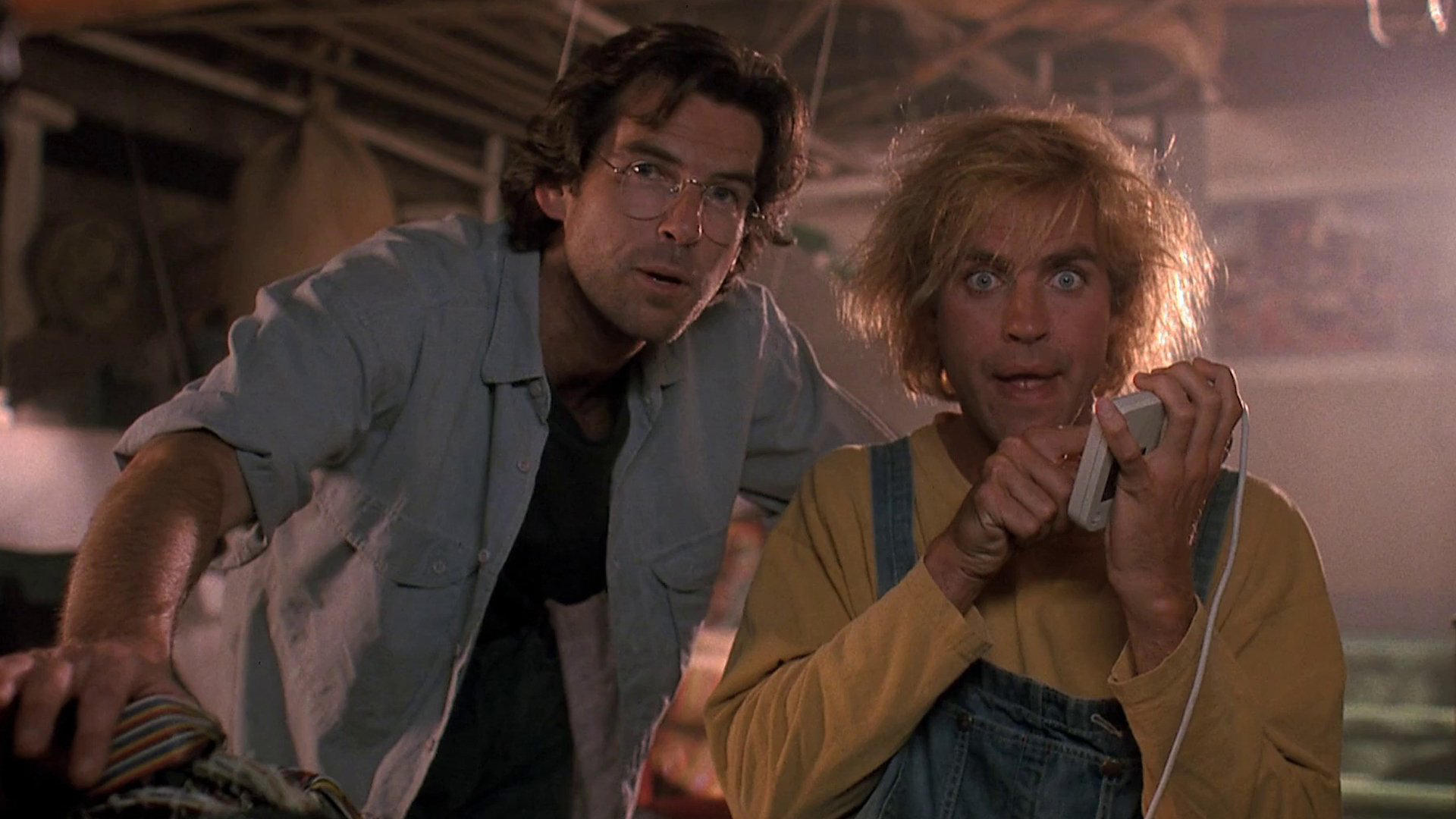
Plot: A mentally challenged man becomes a dangerous genius in a virtual reality simulation.
XR Technology: VR
KBZ’s Take: This was the de facto VR film before the rash of VR films released in the 1990’s. Similar in name only to a Stephen King short story, The Lawnmower Man introduced a generation of gamers and moviegoers to virtual reality biometric suits, virtual reality contraptions that spin you around for no apparent reason, and very outdated virtual reality world animations. But it’s still a classic film amongst VR films and nobody will ever forget “Access Denied”.
Additional Lists: Top Augmented Reality and Virtual Reality Films You Haven’t Seen #4
Where to Stream / Buy: https://amzn.to/3B5cMpj
#7
Iron Man

Plot: After being held captive in an Afghan cave, billionaire engineer Tony Stark creates a unique weaponized suit of armor to fight evil.
XR Technology: AR, MR
KBZ’s Take: Iron Man was one of the of the first superhero franchises to fully embrace AR, MR and AI. The film’s AI (Jarvis) powers much of the AR and MR technology that Tony Stark uses throughout each film.
AR technology was used as the HUD within the Iron Man suit and the films gave a very accurate presentation of how AR would function and be visually displayed to the user.
MR technology was primarily used when Stark was creating the first Mark II Armor in the first film and when he discovers the new Vibranium element (in Iron Man 2 (2010)). These film sequences show how MR would function, and these Hollywood concepts are extremely similar to MR technology and interactions that are in use today.
Where to Stream / Buy: https://amzn.to/3GYz7b8

Plot: John Anderton is a top Precrime cop in the late-21st century, when technology can predict crimes before they’re committed. But Anderton becomes the quarry when another investigator targets him for a murder charge.
XR Technology: AR, MR
KBZ’s Take: Minority Report is considered the gold standard by MR developers for a specific reason. Much of the MR technology shown in Minority Report was developed by John Underkoffler who was an expert in MR User Interface (UI) and User Experience (UX) design.
When John Anderton (Tom Cruise) uses a display to investigate a precrime, many of the interfaces and gestural control shown in the film were already being developed in the real world. Twenty years later, many of the same gestural interactions are in use today for Mixed Reality and Virtual Reality headsets – without the need for special gloves.
Though conceptual at the time (and still not practical in 2023) were the use of personalized AR display ads which pop up and around Anderson as he’s walking through a mall.
Even after 20 years, Minority Report is still one of the best films that shows realistic and practical uses of XR technology that continue to inspire developers to this day.
Where to Stream / Buy: https://amzn.to/3LnnrBv
#5
Sleep Dealer
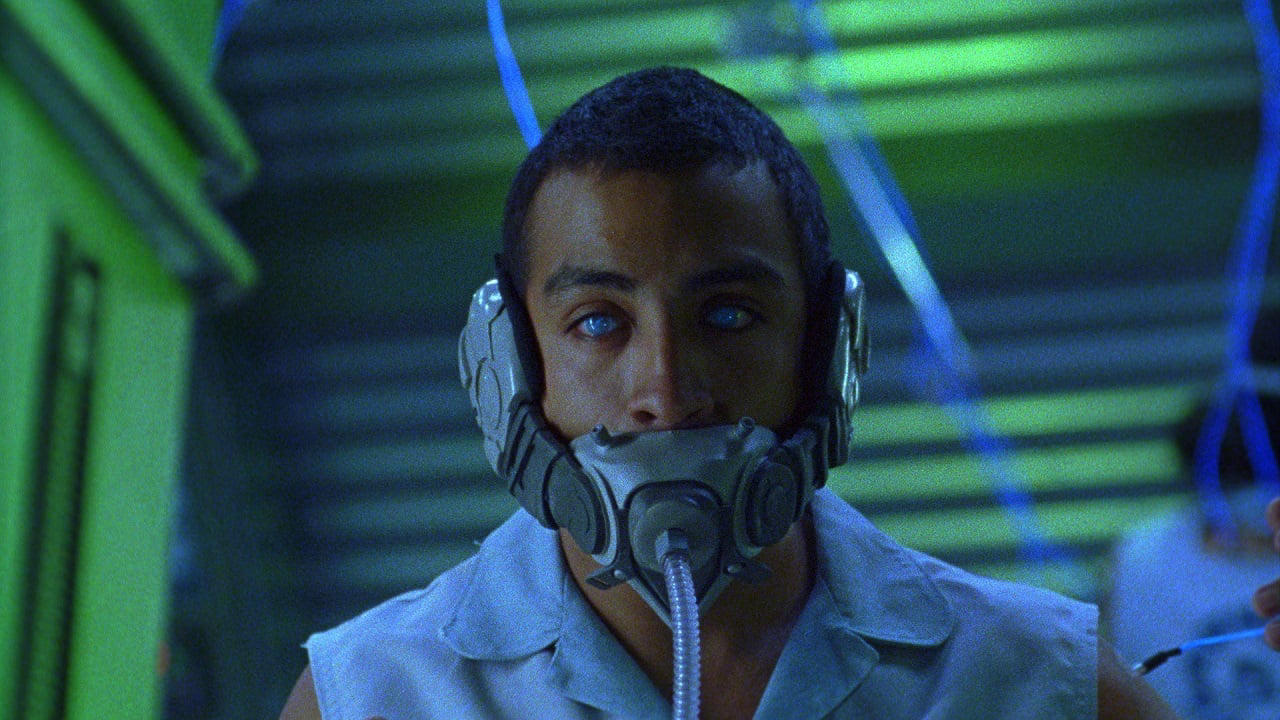
Plot: Strangers try to connect in a futuristic world where they work in virtual labor.
XR Technology: MR
KBZ’s Take: Sleep Dealer was way ahead of its time in relation to showing how MR would enable virtual ‘skilled’ labor. It’s often cited as one of the top films to watch for AR, VR and MR and utilized many early concepts that we’re starting to see today. Highly recommended not only for AR & VR film fans but also for fans of any technology-driven films.
Additional Lists: Top Augmented Reality and Virtual Reality Films You Haven’t Seen #2
Where to Stream / Buy: https://amzn.to/3B2hWCG
#4
They Live

Plot: Nada, a wanderer without meaning in his life, discovers a pair of sunglasses capable of showing the world the way it truly is. As he walks the streets of Los Angeles, Nada notices that both the media and the government are comprised of subliminal messages meant to keep the population subdued, and that most of the social elite are skull-faced aliens bent on world domination. With this shocking discovery, Nada fights to free humanity from the mind-controlling aliens.
XR Technology: AR
KBZ’s Take: Though it’s primarily a Sci-Fi Horror film, They Live featured one of the earliest film examples of AR technology.
Though the AR in the film isn’t presented as a traditional HUD display or hologram-like tech viewable in the real world, it’s actually used in a much more ingenious way. When Nada wears special glasses, he can see subliminal messages throughout the world that aren’t viewable otherwise. This subliminal world around him also plays into the plot of the film and ongoing alien invasion.
Additional Lists: Best Alien Invasion Films #11
Where to Stream / Buy: https://amzn.to/41sIKaO
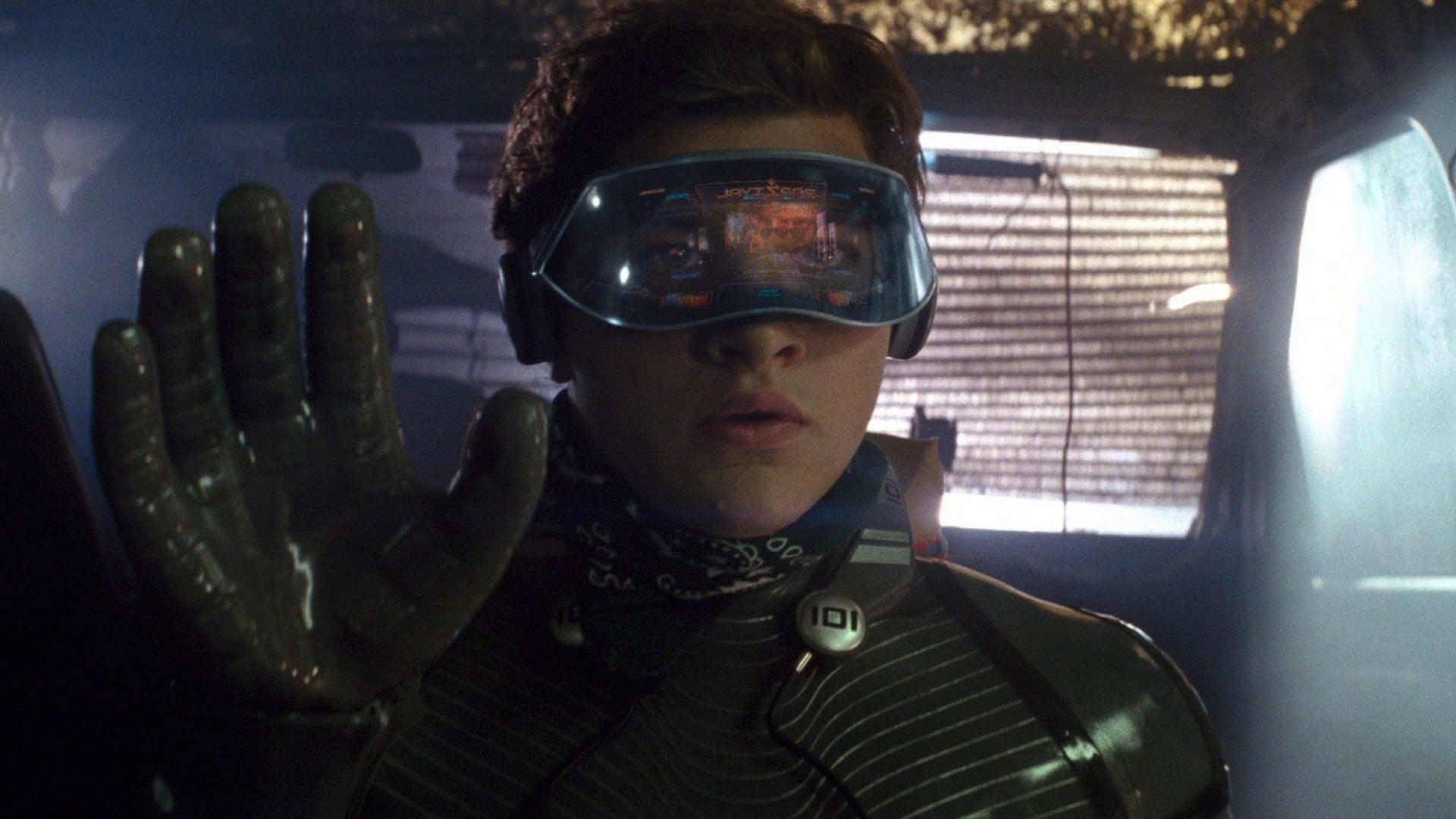
Plot: When the creator of a popular video game system dies, a virtual contest is created to compete for his fortune.
XR Technology: VR
KBZ’s Take: While Snow Crash by Neal Stephenson was the inspirational novel of choice for AR developers, Ernest Cline’s Ready Player One was often cited as the most influential novel for VR. When it was announced Steven Spielberg was making a film of the beloved VR book, many people were worried that most of the conceptual VR in the film wouldn’t translate to screen. They were wrong.
What Spielberg did for AR/MR with Minority Report, he did the same for VR with Ready Player One. While other films do a better job with the technical aspects and limitations of current VR, Spielberg did what he does best – bring the OASIS to life. The OASIS (The Ontologically Anthropocentric Sensory Immersive Simulation) is what every VR company today is striving for.
The other aspect of both the novel and the film that is closer to reality (for better or worse) is how integrated VR becomes in everyone’s lives. While we’re not quite there yet, it seems plausible, if not likely, that VR will come close to the world shown in Ready Player One by the end of this decade.
Where to Stream / Buy: https://amzn.to/3GSer4j
#2
Anon

Plot: In a futuristic world, a detective tracks a woman who has no identity.
XR Technology: AR
KBZ’s Take: Anon is ranked #1 in our Top Augmented Reality and Virtual Reality Films You Haven’t Seen and #2 here for one main reason – it’s one of the only films that shows how Augmented Reality technology can be abused in a connected world. While the film shows a future world where privacy is a thing of the past, it excels in showing the havoc a hacker could cause by ‘hacking’ into an individual’s’ AR view and messing with their mind.
No film has done a better job of showing the perils of an ‘always on and connected’ AR experience that’s closer to reality than one might think. Writer/Director Andrew Niccol has always been ahead of the curve with his films on emerging technology and Anon is his best film after Gattaca (1997) and In Time (2011).
Additional Lists: Top Augmented Reality and Virtual Reality Films You Haven’t Seen #1
Where to Stream / Buy: https://www.netflix.com/title/80195964
#1
The Matrix
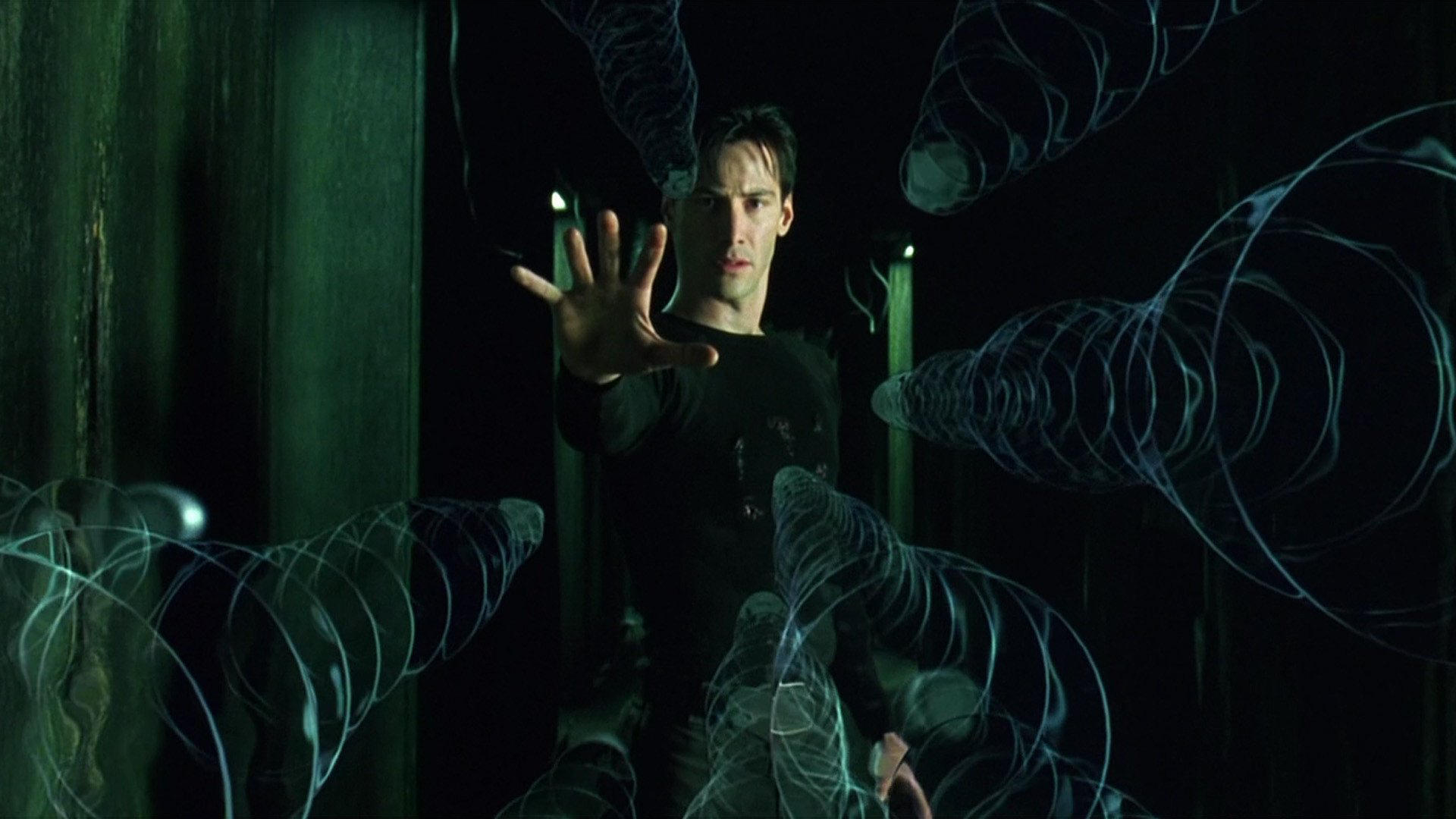
Plot: Set in the 22nd century, The Matrix tells the story of a computer hacker who joins a group of underground insurgents fighting the vast and powerful computers who now rule the earth.
XR Technology: VR, HCI
KBZ’s Take: How could we not list The Matrix as our #1 film here? While the Matrix is arguably the Best Cyberpunk Film, it also incorporates other film subgenres including Augmented Reality & Virtual Reality Films, Martial Arts Films, Post-Apocalypse Films and Films About AI. While it expanded on certain themes in virtually every one of these other subgenres, it also undeniably changed how we think of VR.
Though a rash of VR films would appear in the 1990’s, it was until 1999 that some of the best VR films of the entire subgenre emerged – The Matrix, The Thirteenth Floor (1999) and eXistenZ (1999). While all of these films dealt with different aspects of VR, The Matrix overshadowed them with its underlying theme of saving mankind enslaved in a virtual world.
From ‘jacking in’ via a HCI to learn Kung Fu on the fly to mastering the physics in an AI generated virtual world, The Matrix was a continuous onslaught of conceptual VR that no one had brought to the screen until that time. Sure, most of the VR wasn’t practical at the time and likely won’t be realistic in our lifetime, but the film was one hell of a ride that brought the promise of VR back into the minds of technologists and people around the world.
Additional Lists: Best Post-Apocalypse Films #6
Where to Stream / Buy: https://amzn.to/3kb70NA




Comments 1