













This is the first in a series of articles where we’ll be covering the Top Dystopian Films. Dystopian Films are primarily in the Sci-Fi genre and feature a future society with a totalitarian or authoritarian state, humans living in a world ravaged by environmental disasters and a general decline in societal structures. Dystopian futures are most often found in subgenres including Post-Apocalypse Films, Cyberpunk Films, Future Noir Films, Films About Artificial Intelligence, Films About Robots, Time Travel Films, Survival Dramas and Survival Horror Films.
This first article will cover the Top Dystopian Films You Haven’t Seen from the 1970’s and you can check out additional articles by decade below. We are also going to include a Best Of subgenre article as a grand finale. There are so many great films featuring a dystopian future from the last 60 years that we felt it best to break down some of the subgenre’s forgotten and lesser-known gems by decade before we give you the Best Of list which will likely feature many films you’ve already heard of or have seen.
- Top Dystopian Films You Haven’t Seen – 1970’s
- Top Dystopian Films You Haven’t Seen – 1980’s
- Top Dystopian Films You Haven’t Seen – 1990’s
- Top Dystopian Films You Haven’t Seen – 2000’s
- Top Dystopian Films You Haven’t Seen – 2010’s
- Top Recent Dystopian Films
- Best Dystopian Films
As a general rule of thumb, there tends to be an increase in Dystopian Films when there is also a localized or global fear of government oppression, technological advances (that will result in replacement), environmental disasters or economic catastrophes. In the 1970’s, the U.S. was in the midst of the Vietnam War. As the anti-war movement in the U.S. gained steam, Dystopian films at the time mirrored this pessimistic view of the government and society’s future. 1970’s Dystopian Films tended to focus on three core themes – totalitarian governments ruling society, nuclear warfare or viral pandemics leading to a post-apocalyptic world and environmental disasters leading to a world consumed by overpopulation and/or famine.



The Planet of the Apes films in the 1970’s were some of the first films to feature a Dystopian society where apes ruled over man. In the films, the ruling class of apes oppress both humans and their people, limit information and rule by military force. These are hallmarks of totalitarian governments and were present in Planet of the Apes (1968), Beneath the Planet of the Apes (1970), Conquest of the Planet of the Apes (1972) and Battle for the Planet of the Apes (1973). THX 1138 (1971) was another classic film of the subgenre that featured a totalitarian government that suppressed its people by military force and the forced use of mind-altering drugs. Other notable 1970’s Dystopian films that featured totalitarian rule included Punishment Park (1971), A Clockwork Orange (1971), Z.P.G. (1972), Sleeper (1973), Zardoz (1974), Death Race 2000 (1975), Rollerball (1975) and Stalker (1979).
Films featuring a post-apocalyptic wasteland were also a popular theme of Dystopian films that would continue to grow over the next few decades. In the 1970’s, A Boy and His Dog (1975) and Mad Max (1979) were two of the more notable films set in a dystopian future after a post-apocalyptic event. And The Omega Man (1971) focuses on the survival of Robert Neville after a worldwide pandemic wipes out most of human civilization – and turns other survivors into pseudo-vampires.
Environmental disasters (or eco-disasters) were a minor theme of the subgenre but would grow over the next few decades mirroring the growing concern with climate change. No Blade of Grass (1970) featured a virus that wipes out wheat and rice leading to global famine, Silent Running (1972) involved a future where Earth’s ecosystems are have died and only exist on spacecrafts and Soylent Green (1973) was set in a future Dystopian society where Earth’s population has outgrown the world’s food supply.
Our complete list of Dystopian Films features over 220+ films from 1965 – 2023. This collection features Dystopian futures with totalitarian governments, worlds ruled by mega corporations, post-apocalyptic worlds due to war or environmental disasters and general societal decline. If you don’t see a film in our collection, it is likely in other collections such as Post-Apocalyptic Films, Virus & Pandemic Films, Cyberpunk Films and Survival Dramas. Also, as we’re always updating our collections and will be releasing additional articles of great Dystopian Films, subscribe to our newsletter for our latest updates as we post them.
Classic Dystopian Films from the 1970’s: Beneath the Planet of the Apes (1970), THX 1138 (1971), Conquest of the Planet of the Apes (1972), Battle for the Planet of the Apes (1973), Sleeper (1973), Soylent Green (1973), Rollerball (1975), The Warriors (1979), Mad Max (1979) and Stalker (1979).
Note: We are a participant in the Amazon Services LLC Associates Program, an affiliate advertising program designed to provide a means for us to earn fees by linking to Amazon.com and affiliated sites.
Here is our list of the Top Dystopian Films from the 1970’s:
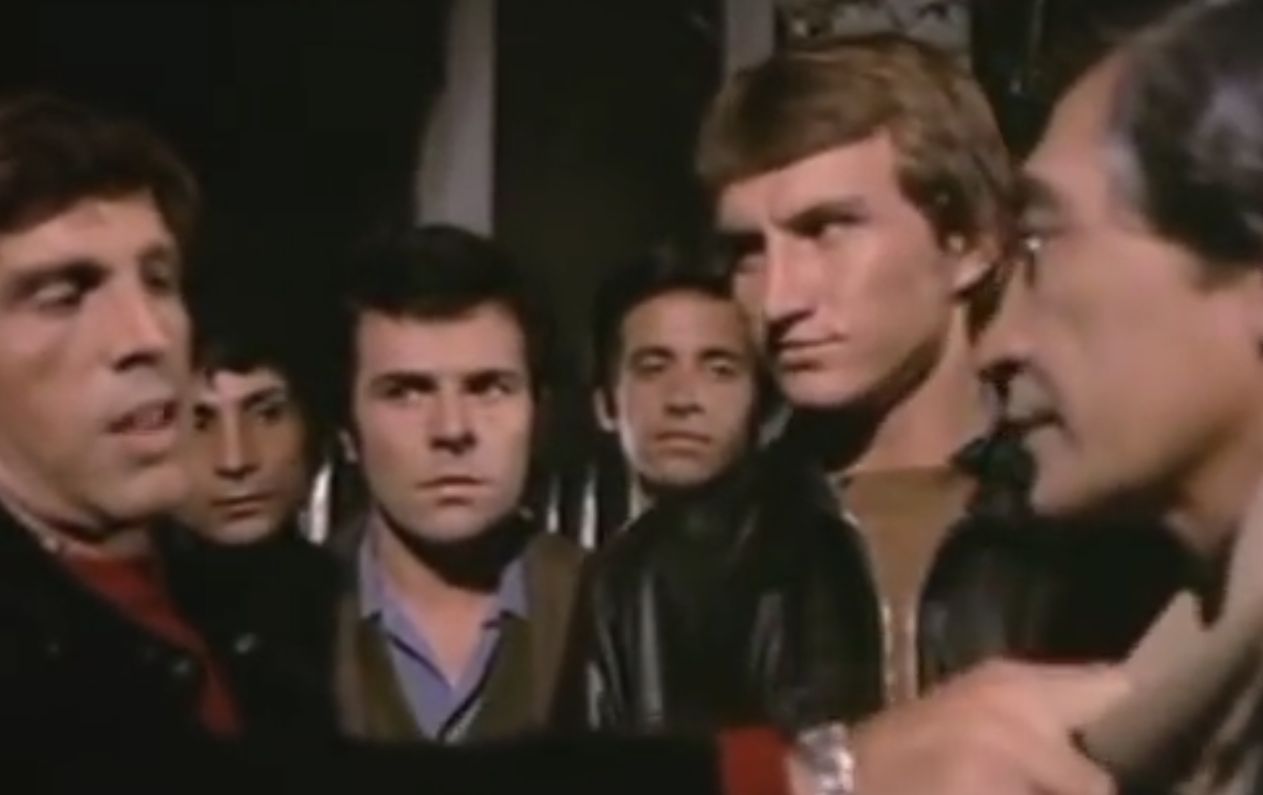
Plot: In an alternate reality, old people are eliminated by younger people.
KBZ’s Take: Also known as La Guerra del cerdo, this Argentinian film is based on a novel of the same name by Adolfo Bioy Casares. The film and novel are about an alternate Dystopian future where older people are considered ‘pigs’ as they don’t contribute to society. As a result, younger people seek these older people out to kill them.
It’s not a great film and is more of a political satire on the Argentinian government at the time (which led to a military coup in 1976 backed by the United States). It is a film worth checking out for fans and completists of the subgenre.
Where to Stream / Buy: https://youtu.be/TSSzzLH6J_A

Plot: In this fictional documentary, U.S. prisons are at capacity, and President Nixon declares a state of emergency. All new prisoners, most of whom are connected to the antiwar movement, are now given the choice of jail time or spending three days in Punishment Park, where they will be hunted for sport by federal authorities. The prisoners invariably choose the latter option, but learn that, between the desert heat and the brutal police officers, their chances of survival are slim.
KBZ’s Take: Shot in a mockumentary format, the film is about a U.S. slipping into authoritarianism where people’s civil rights are slowly stripped away. The film is quite effective when it flips back and forth between the rigged ‘tribunals’ and the detainees who have chosen ‘Punishment Park’ vs. prison.
The film is most interesting as a snapshot in time that mirrors the anti-war sentiment that was growing among younger people at the time. The film is a bit dated but features many scenarios that are relative with today’s youth and concerns over civil rights.
Where to Stream / Buy: https://youtu.be/CM1Kw7mDLAY
#8
Zardoz

Plot: In the far future, a savage trained only to kill finds a way into the community of bored immortals that alone preserves humanity’s achievements.
KBZ’s Take: We’ve seen this film three times and still don’t completely understand it. The film has developed a cult following over the years likely due to its philosophical musings on human immortality and genetic engineering. But you’ll know what you’re in for in the opening scene when Zardoz appears and his followers (The Brutals) chant “The gun is good! The penis is evil!”.
The film is directed by the great john Boorman (Deliverance (1972), Excalibur (1981)) and has some fine acting performances from Sean Connery and Charlotte Rampling. Visually, it’s an amazing film to watch…just don’t ask us to explain it for you. 😊
Where to Stream / Buy: https://amzn.to/3N0dEk4
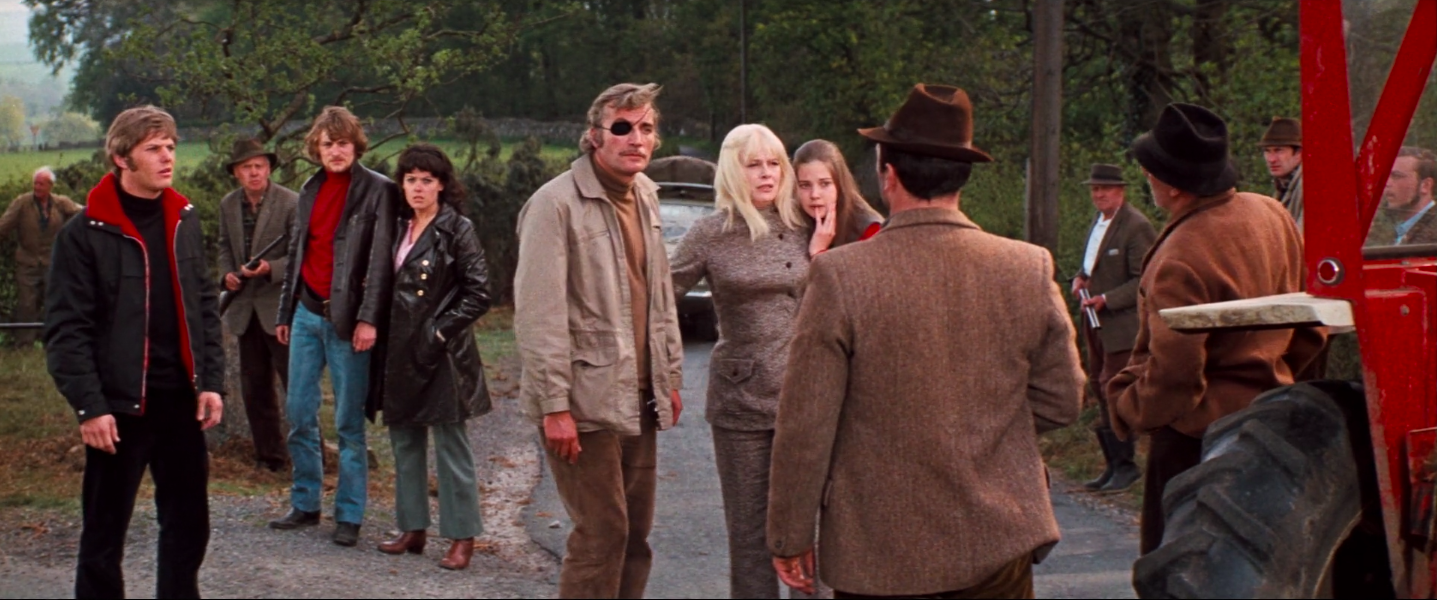
Plot: A strange new virus has appeared, which only attacks strains of grasses such as wheat and rice, and the world is descending into famine and chaos. Architect John, along with his family and friends, is making his way from London to his brother’s farm in northern England where there will hopefully be food and safety for all of them.
KBZ’s Take: While this film’s initial theme is about environmental collapse leading to a post-apocalyptic world, it focuses much more on the resulting societal collapse. It’s also one of the most depressing films on our list.
There’s no hopeful message in this film and if there is a message, it’s about the brutal realism of survival in a now lawless society. There are some interesting ideas in the film such as how rural communities become more important than urban cities, so it does have some unique concepts in the subgenre.
Where to Stream / Buy: https://amzn.to/3X652Ns

Plot: Four teenagers are sent to ecologically devastated 2044 in order to build a new civilization.
KBZ’s Take: Idaho Transfer is a very strange film with a somewhat unique premise. Though it’s a low budget offering, it does have a novel theme of traveling to the future to rebuild society. Though the Dystopian elements aren’t overt in the film, they are central to the plot and ending of the film.
The time travel mechanism in the film also isn’t entirely explained but is shown in a rather interesting way. And finally, the film does have a ‘twist’ ending that rivals another 70’s sci-fi classic in Soylent Green (1973).
Additional Lists: Top Time Travel films You Haven’t Seen – 1970’s #9
Where to Stream / Buy: https://youtu.be/JtLZ8o6mkJM
#5
Z.P.G.

Plot Would-be parents (Oliver Reed, Geraldine Chaplin) dare to defy the law of zero population growth in the smog-filled 21st century.
KBZ’s Take: If you couldn’t figure it out, Z.P.G. stands for Zero Population Growth. This is the premise of this Dystopian future where the world is polluted and overpopulated leading the world government to ban pregnancies. In lieu of actual children, couples are given robot children to raise instead.
The film has some interesting Dystopian concepts that fans of the subgenre will enjoy. And though the special effects are very dated, Oliver Reed and Geraldine Chaplin (as the couple who defy the ban to have a child) make the film worth watching.
Where to Stream / Buy: https://amzn.to/45WySrQ

Plot: Set in the year 2024 in post-apocalyptic America, 18-year-old Vic and his telepathic dog, Blood, are scavengers in the desolate wilderness ravaged by World War IV, where survivors must battle for food, shelter, and sexual companionship in the desert-like wasteland. Vic and Blood eke out a meager existence, foraging for food and fighting gangs of cutthroats.
KBZ’s Take: This film has its lovers and haters and has developed a cult following over the years. The lovers will point to the films Dark Comedy that translated well to screen from Harlan Ellison’s novella of the same name. The haters will likely point to the comedy not working with some of the brutal post-apocalyptic scenes.
We personally fall within the love camp. It’s a unique Post-Apocalyptic Film which also integrates one of the stranger Dystopian societies within the subgenre.
Where to Stream / Buy: https://amzn.to/42FmrxF

Plot: In a boorish future, the government sponsors a popular, but bloody, cross-country race in which points are scored by mowing down pedestrians. Five teams, each comprised of a male and female, compete using cars equipped with deadly weapons. Frankenstein, the mysterious returning champion, has become America’s hero, but this time he has a passenger from the underground resistance.
KBZ’s Take: There are two subgenre films from the 1970’s that focused on totalitarian regimes using deadly sports to appease the masses. Rollerball (1975) is considered a classic film of the subgenre while Death Race 2000 opened to mixed reviews but has become a cult classic over time.
Death Race 2000 became popular over time as it starred a young Sylvester Stallone as Joe “Machine Gun” Viterbo before his breakout hit Rocky (1976) was released a year later. The film also had B-film icon David Carradine as the film’s lead, Frankenstein, along with a young Martin Kove (Karate Kid (1984)) in a humorous supporting role.
Though the film is action-packed with great race scenes and is ultra-violent (to the point of exploitation), it’s a satirical and dark look at the methods a Dystopian government will take to remain in power.
Where to Stream / Buy: https://tubitv.com/movies/675214/death-race-2000

Plot: The last man alive searches for a cure to a man-made virus after biological warfare has decimated civilization.
KBZ’s Take: Based on Richard Matheson’s novel, I Am Legend, this film strays a bit from the source material where the infected are vampiric in nature. Other filmed efforts of the novel, The Last Man on Earth (1964) and I Am Legend (2007), are more faithful to the source material’s vampires.
Where this film also differs from the source material is with its Dystopian themes. While the novel focuses on Neville protecting his home from the vampires, The Omega Man features a different version of “The Family” as Neville’s nemesis. These aren’t vampires but plauge infected people who have not yet ‘turned’, have a group hierarchy and want to wipe out all technology (or pre-pandemic societal norms) in this new world. They are basically a Dystopian cult.
Though the film is dated, it’s a unique take on the novel and features Dystopian themes based on societal sentiment of the time.
Additional Lists: Top Pandemic and Virus Films You Haven’t Seen #8
Where to Stream / Buy: https://amzn.to/3Rkw5BL

Plot: In an overpopulated Earth, the world is running out of food. A New York police detective soon finds himself unraveling a worldwide conspiracy.
KBZ’s Take: Charlton Heston was the King of Dystopia from 1968 – 1973 starring in four classics of the subgenre – Planet of the Apes (1968), Beneath the Planet of the Apes (1970), The Omega Man (1971) and Soylent Green.
Though this is one of the most popular Dystopian films there is, we are listing it so younger generations don’t miss out on this classic film. It probably has the best reveal of a conspiracy in any film and features an amazing cast with Charlton Heston, Edward G. Robinson and Chuck Connors.
The film is also a great Dystopian Future Noir film from its unique visual style to its classic Noir murder investigation headed by Thorn (Heston). The investigative aspects of the film are straight out of 1950’s Noir films which make the eventual conspiracy reveal that much more impactful.
While the film is a bit dated, the Dystopian themes in the film are still relevant today and make the film a must-see of the Dystopian Film, Conspiracy Thriller and Future Noir subgenres.
Additional Lists: Best Future Noir Films #2, Top Films About Conspiracies You Haven’t Seen #8
Where to Stream / Buy: https://amzn.to/40dmZeh




Comments 3