












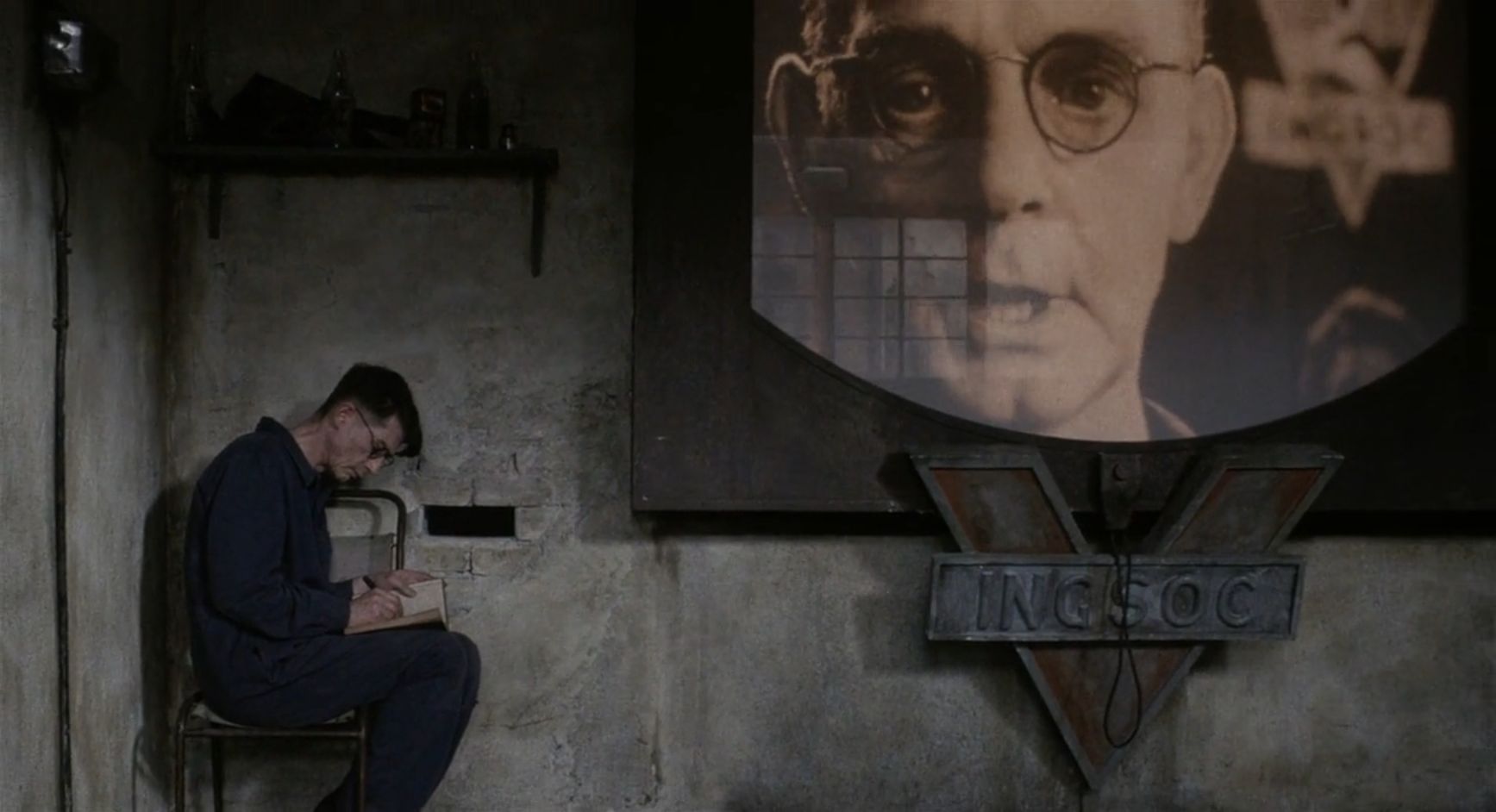

This is the seventh in a series of articles where we’ll be covering the Top Dystopian Films. Dystopian Films are primarily in the Sci-Fi genre and feature a future society with a totalitarian or authoritarian state, humans living in a world ravaged by environmental disasters and a general decline in societal structures. Dystopian futures are most often found in subgenres including Post-Apocalypse Films, Cyberpunk Films, Future Noir Films, Films About Artificial Intelligence, Films About Robots, Time Travel Films, Survival Dramas and Survival Horror Films.
This seventh article will cover the Best Dystopian Films of the entire subgenre and you can check out additional articles by decade below.
- Top Dystopian Films You Haven’t Seen – 1970’s
- Top Dystopian Films You Haven’t Seen – 1980’s
- Top Dystopian Films You Haven’t Seen – 1990’s
- Top Dystopian Films You Haven’t Seen – 2000’s
- Top Dystopian Films You Haven’t Seen – 2010’s
- Top Recent Dystopian Films You Haven’t Seen
- Best Dystopian Films
What are the Best Dystopian Films? Read on as we look at some of the best films with unimaginable futures ruled by totalitarian governments and frightening depictions of human survival from the last 50 years. This is our twenty-third “Best Of” subgenre list where we will rank the Top 20 Films from the Sci-Fi Dystopian Future Films subgenre.



For our rankings we’re going to use some criteria to help define and refine our list. First, we’re going to rank films according to their overall influence on the subgenre. There are many older films that will rank higher on our list as their themes have been replicated and expanded upon in more recent films of the subgenre.
Second, we’re going to prioritize films that depict totalitarian or authoritarian regimes and the methods they use to control society. Totalitarian control and oppression of its citizens are the main hallmarks of Dystopia so will rank higher on our list.
Third, we’re also going to prioritize films that depict the societal divide and breakdown of society in a dystopian future.
Fourth, we’re going to de-prioritize and lower rankings for films that have more prominent post-apocalyptic themes. Though Dystopian Films and Post-Apocalypse Films tend to share similar themes and dystopian futures are often set in a post-apocalyptic environment, we again want the focus to be on the resulting oppressive regimes that emerge in these futuristic wastelands.
And fifth, we had to follow our rule for all of KBZ’s film listings where we only list films that have a 4.0/10 or higher rating.
Our complete list of Dystopian Films features over 220+ films from 1965 – 2023. This collection features dystopian futures with totalitarian governments, worlds ruled by mega corporations, post-apocalyptic worlds due to war or environmental disasters and general societal decline. If you don’t see a film in our collection, it is likely in other collections such as Post-Apocalyptic Films, Virus & Pandemic Films, Cyberpunk Films and Survival Dramas. Also, as we’re always updating our collections and will be releasing additional articles for other great Sci-Fi subgenres, subscribe to our newsletter for our latest updates as we post them.
Note: We are a participant in the Amazon Services LLC Associates Program, an affiliate advertising program designed to provide a means for us to earn fees by linking to Amazon.com and affiliated sites.
Best Dystopian Films
Honorable Mentions: Beneath the Planet of the Apes (1970), Conquest of the Planet of the Apes (1972), Battle for the Planet of the Apes (1973), Sleeper (1973), Rollerball (1975), The Warriors (1979), Mad Max (1979), Stalker (1979), Outland (1981), The Road Warrior (1981), Blade Runner (1982), Class of 1984 (1982), RoboCop (1987), They Live (1988), Back to the Future Part II (1989), Hardware (1990), RoboCop 2 (1990), The City of Lost Children (1995), Dark City (1998), The Matrix (1999), A.I. Artificial Intelligence (2001), Code 46 (2003), One Point O (2004), The Chronicles of Riddick (2004), A Scanner Darkly (2006), Blindness (2008), Sleep Dealer (2008), Moon (2009), District 9 (2009), Daybreakers (2009), The Road (2009), The Book of Eli (2010), In Time (2011), Lockout (2012), Total Recall (2012), Dredd (2012), Cloud Atlas (2012), Oblivion (2013), Divergent (2014), X-Men: Days of Future Past (2014), The Maze Runner (2014), The Lobster (2015), What Happened to Monday (2017), Blade Runner 2049 (2017), Isle of Dogs (2018), Ready Player One (2018), Mortal Engines (2018), Alita: Battle Angel (2019), The Forever Purge (2021), The Matrix Resurrections (2021), Crimes of the Future (2022) and JUNG_E (2023).
Rank 20-1:
#20 The Hunger Games (2012) Where to Stream / Buy: https://amzn.to/3qeWfNz
#19 Snowpiercer (2013) Where to Stream / Buy: https://amzn.to/3Ou7QA6
#18 The Running Man (1987) Where to Stream / Buy: https://amzn.to/3DTG2Ad
#17 The Truman Show (1998) Where to Stream / Buy: https://amzn.to/3DMZONX
#16 Brazil (1985) Where to Stream / Buy: https://amzn.to/441vNEA
#15 The Handmaid’s Tale (1990) Where to Stream / Buy: https://amzn.to/3JvD0FL
#14 Mad Max: Fury Road (2015) Where to Stream / Buy: https://amzn.to/3OOP1cz
#13 Children of Men (2006) Where to Stream / Buy: https://amzn.to/3KydEHX
#12 12 Monkeys (1995) Where to Stream / Buy: https://amzn.to/3OqCCdk
#11 Blade Runner (1982) Where to Stream / Buy: https://amzn.to/3Yr3aja
#10
Idiocracy

Plot: To test its top-secret Human Hibernation Project, the Pentagon picks the most average Americans it can find – an Army private and a prostitute – and sends them to the year 2505 after a series of freak events. But when they arrive, they find a civilization so dumbed-down that they’re the smartest people around.
KBZ’s Take: We know the first reaction to our Top 10 will be, “How isn’t Blade Runner listed in your Top 10? It’s a classic dystopian film!”. And that is true but based on the criteria we defined for our list we want the focus to be on totalitarian regimes and societal conditions in the future. While Blade Runner has amazing visual dystopian elements, it focuses on themes of AI and Future Noir with the dystopian environment in the background. That left us with Idiocracy in this slot – perhaps the greatest satire of a dystopian future there is.
Like his previous effort that satirizes office culture in Office Space (1999), Mike Judge turns his attention to mass consumption, advertising and the media and its eventual dumbing down of future society in Idiocracy. Though the film was made in 2006 and set hundreds of years in the future, it’s eerily prescient for how current society is closer to a Dwayne Elizondo Mountain Dew Camacho presidency than we’d care to admit.
Where to Stream / Buy: https://amzn.to/3OM3XqH
#9
The Platform

Plot: A mysterious place, an indescribable prison, a deep hole. An unknown number of levels. Two inmates living on each level. A descending platform containing food for all of them. An inhuman fight for survival, but also an opportunity for solidarity.
KBZ’s Take: This is a dark and depressing Spanish film, but one of the better Dystopian Films that focuses on the issues of class divide. And taking the issue of class divide even further, it exposes humanity at its worst in an effort to survive.
While the film is an allegorical take on capitalism (and to an extent supply-side economic theory run amok), it’s similar to Snowpiercer (2013) in how social classes function in a dystopian environment where the rules and laws are written by the elite class at the expense of lower classes.
It’s one of the deeper and more thought-provoking films of the subgenre that also tackles themes of religion and morals when life itself seems lost. Highly recommended film of the subgenre.
Where to Stream / Buy: https://www.netflix.com/title/81128579

Plot: In a world in which Great Britain has become a fascist state, a masked vigilante known only as ‘V’ conducts guerrilla warfare against the oppressive British government. When V rescues a young woman from the secret police, he finds in her an ally with whom he can continue his fight to free the people of Britain.
KBZ’s Take: Like Charlton Heston, John Hurt is a familiar face in Dystopian Films having played the titular hero Winston Smith in 1984 (1984) to the villainous High Chancellor Sutler in this film. And like 1984, V for Vendetta explores how far authoritarian and totalitarian regimes will use government power to oppress and control their citizenry.
Though the film is based on the graphic novel of the same name and both film and novel explore political extremes in a dystopian environment, the film focuses on neoconservatism vs. liberalism while the novel was more centered around far-right fascism vs. far-left anarchy. This contrast in political ideologies is significant throughout the film as V (Hugo Weaving) recruits Evey Hammond (Natalie Portman) in his revolution to free the populace from control of the totalitarian state.
It’s one of the more action-oriented films of the subgenre but also one of the best that shows how mass surveillance and propaganda in a future dystopia are used as tools by a totalitarian state. A theme of the film that’s much closer to reality than we’d like to believe.
Additional Lists: Best Future Noir Films #18
Where to Stream / Buy: https://amzn.to/3qkbMvt
#7
The Purge

Plot: Given the country’s overcrowded prisons, the U.S. government begins to allow 12-hour periods of time in which all illegal activity is legal. During one of these free-for-alls, a family must protect themselves from a home invasion.
KBZ’s Take: The Purge series of films has always had a foundation in dystopian politics, but the political themes of the franchise have become more prominent with each subsequent film. Though the initial film was mostly a Home Invasion thriller with an underlying theme of racial and economic disparity, the other franchise films tackled themes of growing totalitarian resistance in The Purge: Anarchy (2014), totalitarian oppression of political opponents in The Purge: Election Year (2016), the initial rise of totalitarianism in The First Purge (2018) and the franchise’s most overt themes which dealt with immigrant demonization and racism in The Forever Purge (2021).
Though the Purge films have received equal amounts of praise and condemnation (depending on political leanings), they have always done one thing well – show how a totalitarian regime’s methods and messaging are a potential outcome of current political machinations and rhetoric.
Where to Stream / Buy: https://amzn.to/45erZko
#6
THX 1138
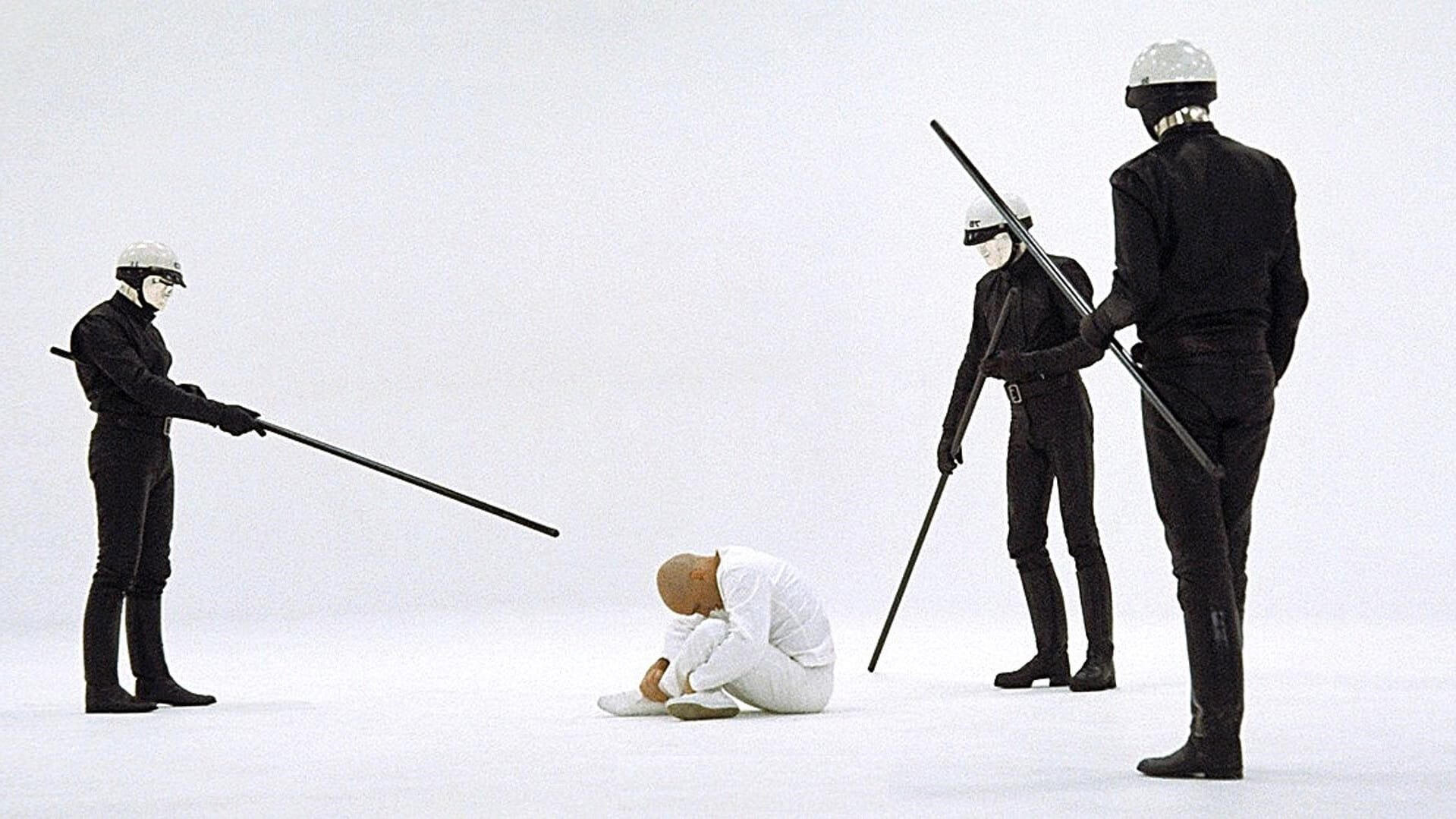
Plot: People in the future live in a totalitarian society. A technician named THX 1138 lives a mundane life between work and taking a controlled consumption of drugs that the government uses to make puppets out of people. As THX is without drugs for the first time he has feelings for a woman and they start a secret relationship.
KBZ’s Take: THX 1138 is one of the most visually impressive films of the subgenre with unique themes that have been adopted and expanded upon by future dystopian films. The use of drugs by a totalitarian regime to suppress citizens’ emotions was also a major theme of Equals (2015) and Equilibrium (2002). The use of androids to monitor and enforce compliance of totalitarian policies in Elysium (2013) and Code 8 (2019). And other themes of THX 1138 that can be found in subgenre classics from The Matrix (1999) to I, Robot (2008).
Similar to how George Lucas redefined the Space Adventure Film with Star Wars: Episode IV – A New Hope (1977), THX 1138 helped shaped how future dystopian regimes and societies would look and function. Though THX 1138 wasn’t the cultural phenomenon that Star Wars was, it’s just as important as a film and a classic of the subgenre.
Where to Stream / Buy: https://amzn.to/3Qvb9tq

Plot: In a futuristic Japanese society, ninth grade students are forced to kill each other.
KBZ’s Take: Battle Royale is quite popular in Horror fandom and likely well known by fans of this subgenre. And it’s a must-see film for younger filmgoers that are just getting into Dystopian Films.
It has a unique dystopian concept, it’s brutal and gory and it’s the ‘one ring to rule them all’ of the Survival Horror film subgenre. Its plot might sound familiar because it’s also the similar plot to the more recent film, The Hunger Games. It also paved the way for some of the best Dystopian Survival Horror TV series in the last few years with Squid Game and Alice in Borderland.
As for the film itself, it defines what Survival Horror is all about – from its human vs. human raw fight for survival to the psychological impact of having to turn from the hunted into the hunter. Plus, at its core, it’s a Japanese Horror film which means you’re going to get all the great weirdness that comes with the J-Horror subgenre.
Additional Lists: Top Survival Horror Films You Haven’t Seen #1, Top Dystopian Films You Haven’t Seen – 2000’s #2
Where to Stream / Buy: https://amzn.to/3ORzNBG

Plot: In an overpopulated Earth, the world is running out of food. A New York police detective soon finds himself unraveling a worldwide conspiracy.
KBZ’s Take: Charlton Heston was the King of Dystopia from 1968 – 1973 starring in four classics of the subgenre – Planet of the Apes (1968), Beneath the Planet of the Apes (1970), The Omega Man (1971) and this film.
Soylent Green was the #1 on our Top Dystopian Films You Haven’t Seen – 1970’s article and we listed it there so younger generations didn’t miss out on this classic film of the subgenre. For our list here, there’s little doubt that the film is one of the best of the subgenre and it probably has the best reveal of a conspiracy in any film. There’s also the matter of its amazing cast with Charlton Heston, Edward G. Robinson and Chuck Connors.
The film is also a great Dystopian Future Noir film from its unique visual style to its classic Noir murder investigation headed by Thorn (Heston). The investigative aspects of the film are straight out of 1950’s Noir films which make the eventual conspiracy reveal that much more impactful.
While the film is a bit dated, the Dystopian themes in the film are still relevant today and make the film a must-see of the Dystopian Film, Conspiracy Thriller and Future Noir subgenres.
Additional Lists: Top Dystopian Films You Haven’t Seen – 1970’s #1, Best Future Noir Films #2, Top Films About Conspiracies You Haven’t Seen #8
Where to Stream / Buy: https://amzn.to/40dmZeh

Plot: In the future, crime is out of control and New York City’s Manhattan is a maximum-security prison. Grabbing a bargaining chip right out of the air, convicts bring down the President’s plane in bad old Gotham. Gruff Snake Plissken, a one-eyed lone warrior new to prison life, is coerced into bringing the President, and his cargo, out of this land of undesirables.
KBZ’s Take: There’s been an ongoing debate as to whether Escape From New York should be classified as a Cyberpunk Film. In our article of the Best Cyberpunk Films, we have the film listed as #5 and provided arguments as to why the film ultimately fits the criteria for Cyberpunk. However, there’s no debate that Escape From New York is a Dystopian Film and one of the best of the subgenre.
From the film’s opening graphic animation showing prison walls slowly encircling Manhattan Island, the viewer is thrust into a tale of future dystopia where all bets are off. It’s nihilistic view of a crime-ridden future overseen by a police state with an anti-hero in Snake Plissken was fresh and exciting. It also developed some of the most iconic characters of the subgenre in Snake (Kurt Russell), Hauk (Lee Van Cleef), Brain (Harry Dean Stanton) and The Duke of New York himself (Isaac Hayes).
During a 2-year period in the early 1980’s, viewers were treated to three consecutive dystopian tales – Escape From New York (1981), The Road Warrior (1981) and Blade Runner (1982). All classic films of multiple Sci-Fi subgenres, all with completely different stories and dystopian themes and, collectively, all would have an outsized influence on the subgenre for decades to come.
Additional Lists: Top Cyberpunk Films #5
Where to Stream / Buy: https://amzn.to/3HYSWiR
#2
Equilibrium

Plot: In a dystopian future, a totalitarian regime maintains peace by subduing the populace with a drug and displays of emotion are punishable by death. A man in charge of enforcing the law rises to overthrow the system.
KBZ’s Take: In our opinion, Equilibrium is THE Dystopian Film of the 2000’s and, if not for the next film on our list, would also be our top pick here. While it is considered a classic film of the subgenre, it was overshadowed by The Matrix (1999) and The Matrix Reloaded (2003) upon its release in 2002.
The film features all the classic elements of dystopia from book burning to drug-induced emotional suppression to classic forms of Big Brother propaganda and surveillance. The film even creates a new form of martial arts with guns called “Gun Kata” used by Clerics who are enforcers for the government.
Visually, the film is beautiful to look at and has director Kurt Wimmer’s trademark Dystopian and Cyberpunk worldbuilding (which are also present in his other film Ultraviolet (2006)). Though the film was released in 2002, it has many themes that are still relevant 20 years later – especially the film’s warnings about a complacent populace that risks the rise of Totalitarianism.
Additional Lists: Top Dystopian Films You Haven’t Seen – 2000’s #1 Best Cyberpunk Films #4, Best Future Noir Films #16
Where to Stream / Buy: https://amzn.to/3HXfsZq

Plot: George Orwell’s novel of a totalitarian future society in which a man whose daily work is rewriting history tries to rebel by falling in love.
KBZ’s Take: It’s no surprise 1984 is our top Dystopian Film as almost every film in the subgenre has been influenced by both George Orwell’s novel and its film adaptation. Orwell’s novel produced many of the terms popularized both within the subgenre and pop culture including “Big Brother”, “Thought Police” and “Memory Hole”. You can see Orwell’s influence in many classic films of the subgenre including films from this list such as THX 1138 (1971), Equilibrium (2002) and V for Vendetta (2006).
While we would recommend reading the novel first, the film is an excellent adaptation that captures the major themes of oppression and hopelessness in a totalitarian state. Visually, the film is stunning from its portrayal of Big Brother propaganda projected to all forms of media to government-conditioned citizens chanting in lockstep in support of the state. And the film’s portrayal of the state’s surveillance methods is even more eerily relevant almost 40 years later.
1984 is a dark and depressing look at a dystopian future but one that needs to be seen to better appreciate the daily freedoms that people living in democratic societies often take for granted.
Where to Stream / Buy: https://amzn.to/47grY1g