










This is the first in a series of articles where we’ll be covering Cold War Films. Films About the Cold War involve the ‘Cold War’ period between the U.S. and Soviet Union from 1945 – 1991 and typically involve themes of Spies & Espionage, Double Agents, the CIA & KGB, the threat of Nuclear War & World War III and fears of Communism. Due to the 46-year period of the Cold War, many historical topics and events are also covered in this subgenre including the Korean War, the Soviet-Afghan War, the Berlin Wall, The Cuban Missile Crisis and other events involving direct or indirect U.S. and Soviet Union military or political confrontations. Though the Vietnam War also occurred during the Cold War and involved the U.S. and Soviet Union, due to the large number of films about Vietnam, we have an entirely separate subgenre dedicated specifically to Vietnam War Films.
This first article will cover the Top Cold War Films You Haven’t Seen from the 1970’s and you can check out additional articles by decade below. We are also going to include a Best Of subgenre article as a grand finale. There are so many great Cold War films over the last 70 years that we felt it best to break down some of the subgenre’s forgotten and lesser-known gems by decade before we give you the Best Of list which will likely feature many films you’ve already heard of or have seen.
- Top Cold War Films You Haven’t Seen – 1970’s
- Top Cold War Films You Haven’t Seen – 1980’s
- Top Cold War Films You Haven’t Seen – 1990’s
- Top Cold War Films You Haven’t Seen – 2000’s
- Top Cold War Films You Haven’t Seen – 2010’s
- Best Recent Cold War Films
- Best Cold War Films
- Funniest Cold War Comedies
Though we typically only write subgenre articles for films starting in the 1970’s, we felt it was warranted to mention classic films of the Cold War subgenre made before our cutoff year. These subgenre classics include sci-fi films with Cold War themes to some of the early James Bond films and you can view our list of films below (before our Top 10 list).



The dominant theme throughout the entire Cold War subgenre involved spies & espionage. Many classic Films About Spies & Espionage involve Cold War themes and this decade had an abundance of espionage-themed films with spies and double agents from the U.S., U.K. and Soviet Union. Other subgenre themes of the decade included Cold War conspiracies, sci-fi films involving nuclear weapons and Historical Biopics and Event films from the Cold War period.
Cold War spies & espionage was such a prevalent theme of the Cold War period that it produced many subthemes in the 1970’s. Double agents were found in films The Executioner (1970), The MacKintosh Man (1973), Who? (1974), Telefon (1977) and The Human Factor (1979). Spy infiltration into East Germany was the focus of The Looking Glass War (1970) and into the Soviet Union in The Kremlin Letter (1970). And Avalanche Express (1979) featured a Soviet general defecting to the West.
The 1970’s also produced a wealth of Conspiracy Thrillers and many films used the backdrop of the Cold War for international and sinister conspiracies. Spy Story (1976) involved a conspiracy in the Arctic, a conspiracy to fake the first manned mission to Mars during the Cold War’s Space Race was the basis of Capricorn One (1977). And Telefon (1977) featured a conspiracy involving Soviet sleeper agents in the U.S.
Previous sci-fi films of the 1950’s including The Thing from Another World (1951) and The Day the Earth Stood Still (1951) utilized themes of the Cold War including communism and the threat of nuclear war. It wasn’t until two decades later that sci-fi films would return to Cold War-themed narratives. Colossus: The Forbin Project (1970) was about futuristic artificial intelligence taking control of the U.S. and Soviet Union’s nuclear arsenals. Who? (1974) would involve a man with a metal face who claims to be an American scientist. And the disaster film Meteor (1979) would buck the trend of adversarial U.S. and Soviet Union themes with both countries working together to stop a meteor heading towards Earth that will cause an extinction level event.
And finally, Biopics and Historical Event films about Cold War events would start to make an appearance in the subgenre during the 1970’s. M*A*S*H (1970) was based on Richard Hooker’s experience as a medic during the Korean War. The MacKintosh Man (1973) was loosely based on Soviet spy George Blake. American pilot Francis Gary Powers would receive a TV Movie biopic covering his experience during the 1960 U-2 incident. And MacArthur (1977) covers American General Douglas MacArthur and his experiences in World War II and The Korean War.
Our complete list of Cold War Films features over 229+ films from 1951 – 2023. This collection features almost every film involving Spies & Espionage, The Korean War, The Berlin Wall and other historical events occurring during the Cold War period. If you don’t see a film in our collection, it might not be set during the Cold War or is likely in our lists of Films About Spies & Espionage, Conspiracy Thrillers, Historical Biopics and Historical Event Films. Also, if you’re just starting to get into films and themes about The Cold War, we have a previous list of The Top Films About the Cold War You Haven’t Seen which is an overview of some of the lesser-known films of the subgenre. For these lists, we’re going much more in depth into the Cold War film subgenre so subscribe to our newsletter to get updated as we release additional lists of great Cold War films from subsequent decades.
Classic Cold War Films prior to 1970: The Thing from Another World (1951), The Day the Earth Stood Still (1951), North by Northwest (1959), On the Beach (1959), Dr. No (1962), The Manchurian Candidate (1962), From Russia with Love (1963), Charade (1963), Dr. Strangelove or: How I Learned to Stop Worrying and Love the Bomb (1964), Seven Days in May (1964), Goldfinger (1964), Fail Safe (1964), The Spy Who Came In From The Cold (1965), Thunderball (1965), Torn Curtain (1966), You Only Live Twice (1967), The Bofors Gun (1968), Project X (1968), Ice Station Zebra (1968) and Topaz (1969).
Classic Cold War Films from the 1970’s: Colossus: The Forbin Project (1970), The MacKintosh Man (1973), The Spy Who Loved Me (1977), Capricorn One (1977) and Telefon (1977).
Cold War Films from the 1970’s that didn’t make our list: The Looking Glass War (1970), The Executioner (1970), End of the Game (1975), Spy Story (1976), Francis Gary Powers True Story U-2 Spy Incident (1976), Twilight’s Last Gleaming (1977), Avalanche Express (1979), The Human Factor (1979) and Cuba (1979).
Note: We are a participant in the Amazon Services LLC Associates Program, an affiliate advertising program designed to provide a means for us to earn fees by linking to Amazon.com and affiliated sites.
Here is our list of the Top Cold War Films You Haven’t Seen from the 1970’s:
#10
Who?
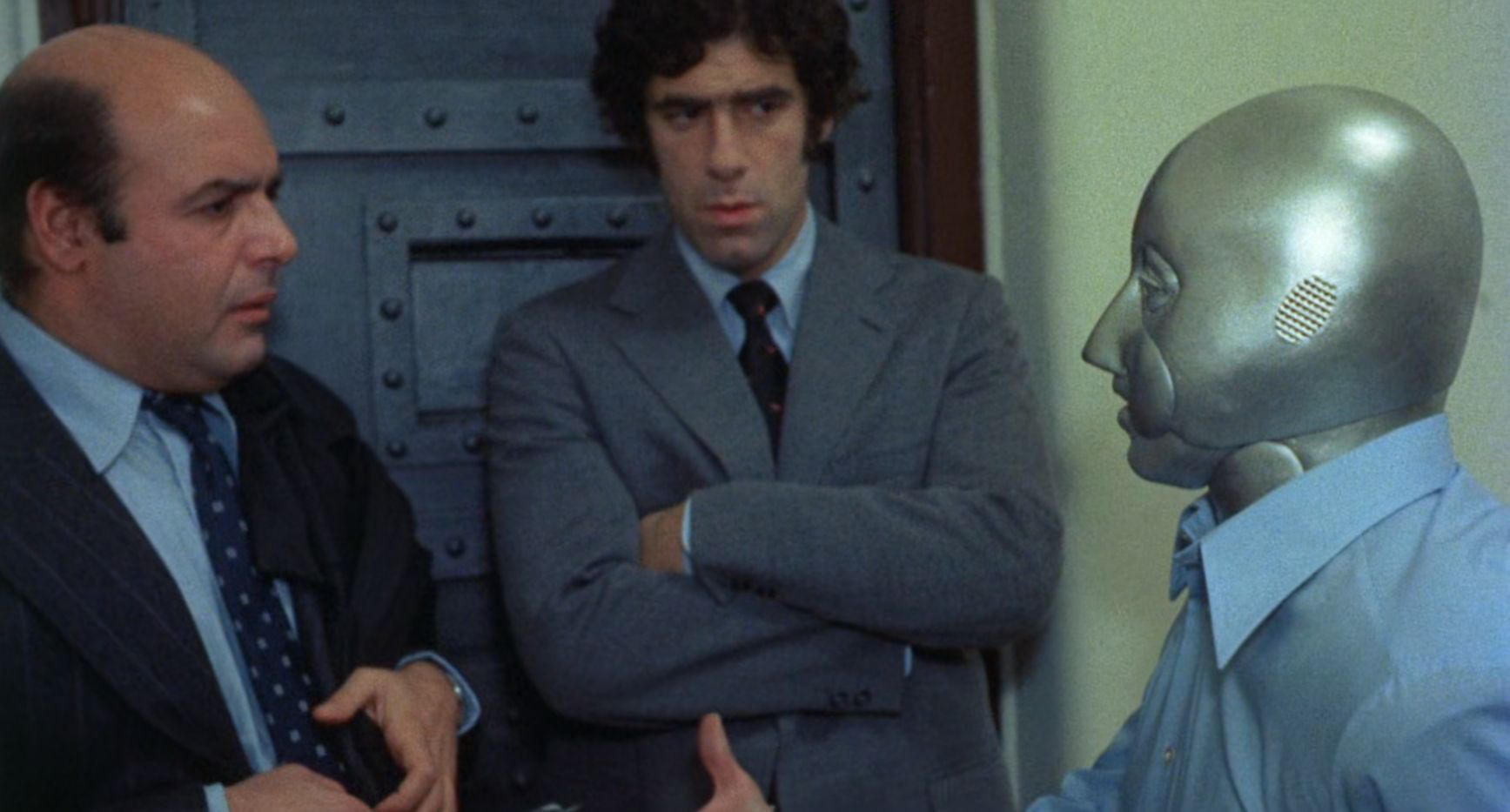
Plot: After an American scientist is severely injured in a car crash in East Germany, East German scientists use metal implants to save him. Once he’s back in the United States, no one can tell if it’s really him, so an intelligence specialist must determine who is under the mask.
KBZ’s Take: This film has its faults – primarily its pacing – but it’s one of the better subgenre films of the 1970’s that explored Cold War paranoia. Brainwashing was a popular subtheme of the subgenre – popularized in The Manchurian Candidate (1962) – and this film increases the suspense by having ‘the American scientist’ in an emotionless and robotic looking mask.
We are recommending this film for fans and completists of the subgenre but it’s notoriously difficult to find. We’ll update our link to stream or buy the film once it’s available.
Where to Stream / Buy: N/A
#9
Madman

Plot: While trying to escape from the Soviet Union, a Soviet Jewish man is locked in a mental institution, where he gets brutally tortured for several years.
KBZ’s Take: We’re mainly listing this film for nostalgic purposes. Though the film only has superficial themes of the Cold War and is somewhat bland, it does have some impressive early performances worth watching for.
First, there’s Michael Beck (as Boris Abramovich) who plays the psychologically damaged man looking for revenge against the Soviets. He would become a star a year later as Swan in The Warriors (1979).
Second, there’s Sigourney Weaver (as Gale) as the love interest who would also become a star a year later in Alien (1979).
And with the best performance in the film is a young F. Murray Abraham (as Marco Cohen) who channels Klinger from M*A*S*H by looking to get out of the army in any way possible. Abraham would become a star a few years later in Scarface (1983) and Amadeus (1984).
Where to Stream / Buy: https://youtu.be/RKxgcqOBULI
#8
Meteor
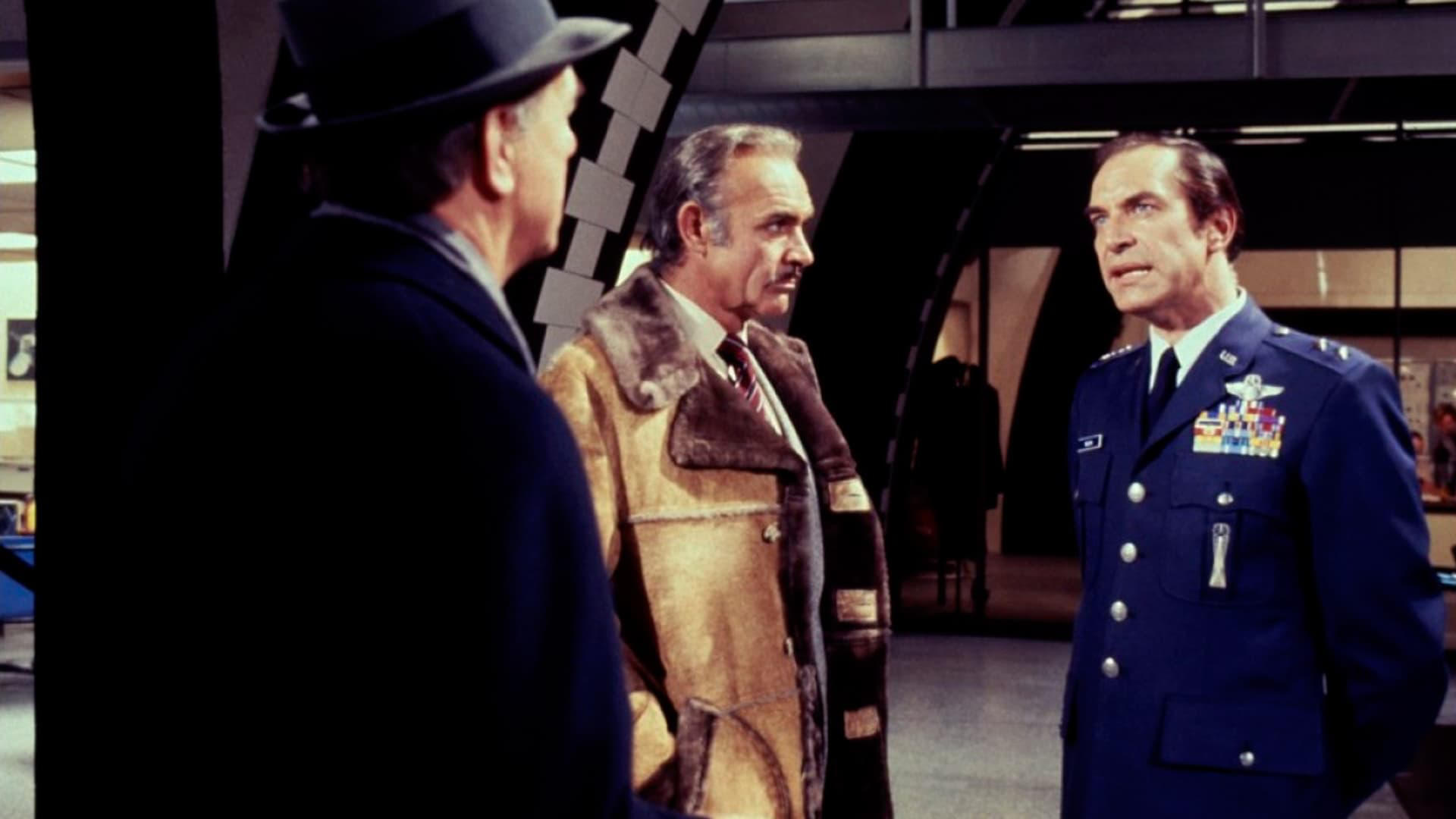
Plot: In this disaster movie, Americans and Soviets must put aside their differences to save civilization from a huge meteor bearing down on the planet. Paul Bradley (Sean Connery) enlists the expertise of fellow scientist Alexei Dubov (Brian Keith), who is joined by his beautiful assistant, Tatiana Donskaya (Natalie Wood). Although Paul and Tatiana are attracted to each other, they wisely focus on taking out the meteor, which may still cause massive destruction even if it is partially damaged.
KBZ’s Take: Meteor gets some unfair criticism as it’s often compared to similar disaster films in Deep Impact (1998) and Armageddon (1998). Both of those films were made almost 20 years after Meteor and had much better special effects.
It’s not a perfect film. Even with an all-star cast some of the acting is wooden and the plot jumps from crisis to crisis. But the trend of the West and Soviets working together towards a common goal was arguably started in this film (and to a lesser extent in The Spy Who Loved Me (1977) and Telefon (1977)) and would be precursors to other détente-themed Cold War films in following decades.
Where to Stream / Buy: https://tubitv.com/movies/100001288/meteor
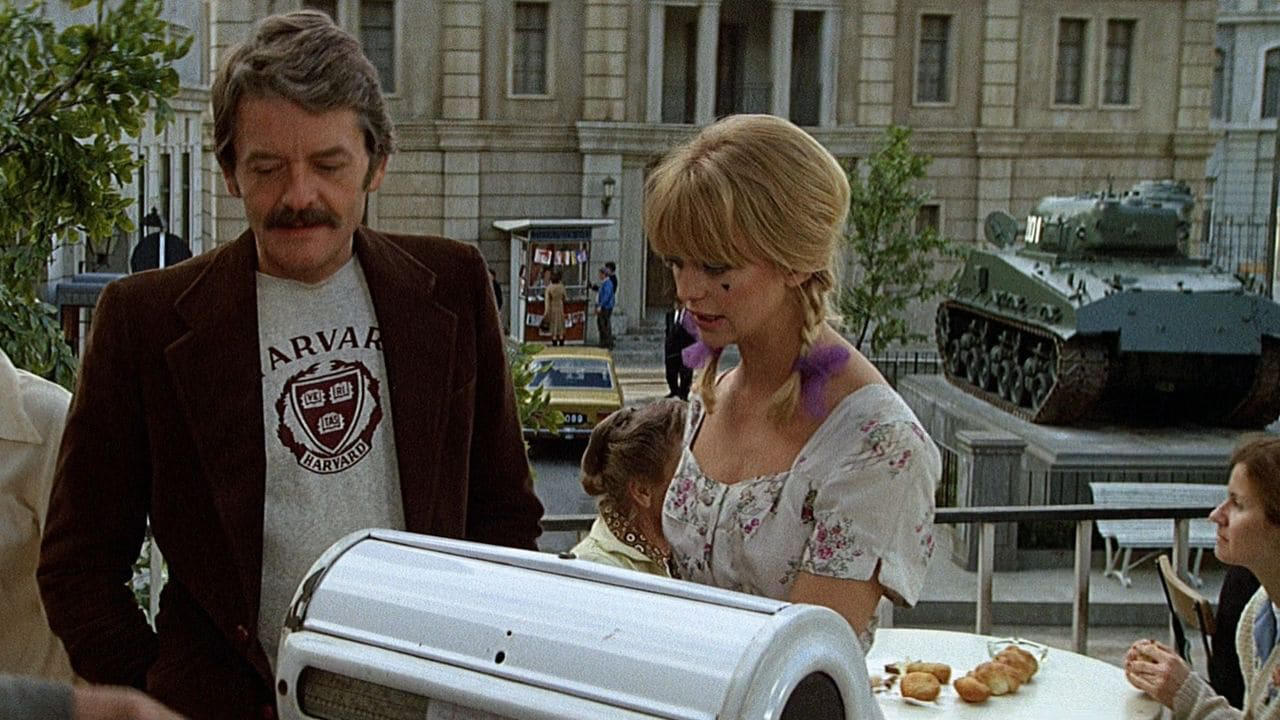
Plot: A beautiful Russian ballerina falls in love with an American news correspondent while the KGB monitors their relationship.
KBZ’s Take: Though this film stars Goldie Hawn, Hal Holbrook and Anthony Hopkins, it’s become an obscure film that’s been lost to time. This also isn’t a typical film of the subgenre. It is set in the Soviet Union and features KGB agents, but it’s mostly about a tragic romance between Joe (Holbrook) and Oktyabrina (Hawn).
We’re still recommending this film for fans and completists of the subgenre as it has some very good performances and an interesting plot. However, don’t go into the film expecting a spy story – it’s much better suited for a date night movie (and one that could be a compromise for a Cold War-themed romance).
Where to Stream / Buy: https://amzn.to/3KlNDeF
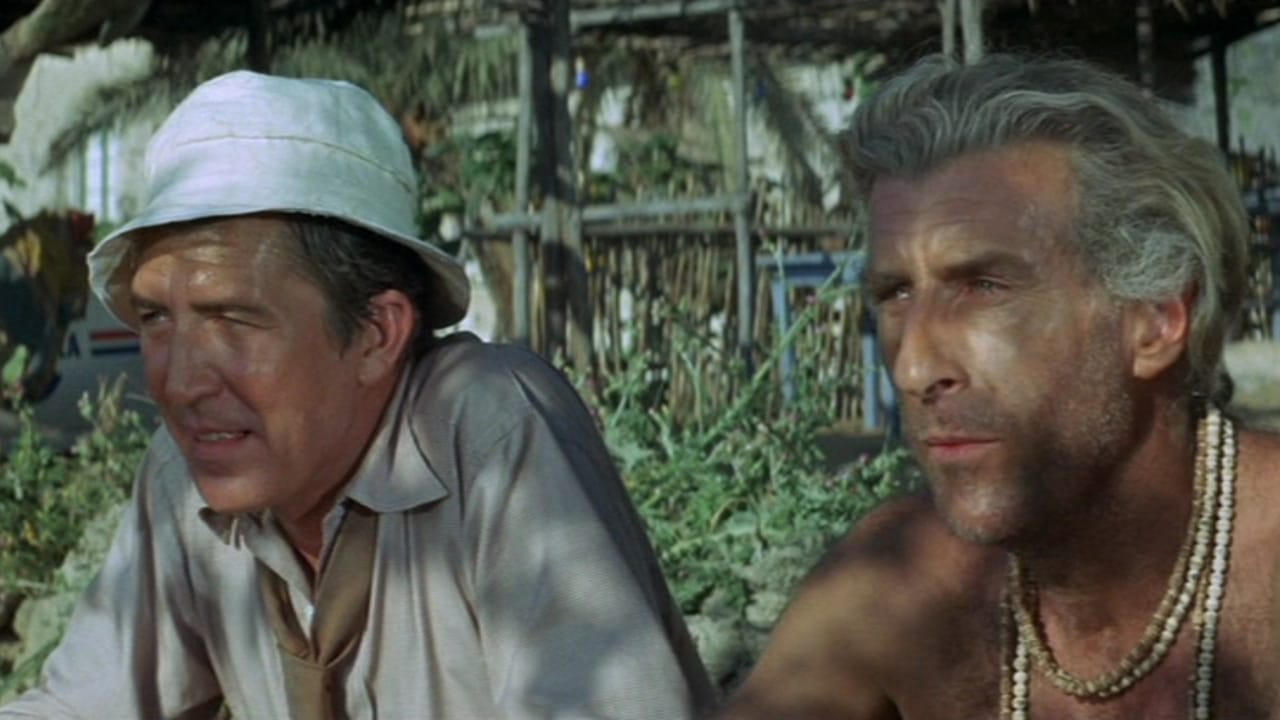
Plot: A network of older spies from the West recruits a young intelligence officer with a photographic memory to accompany them on a mission inside Russia. They must recover a letter written by the CIA that promises American assistance to Russia if China gets the atomic bomb.
KBZ’s Take: This is a film based on a novel of the same name by Noel Behn. Though the film is a faithful adaptation of the book, that’s part of the problem. It’s a novel considered ‘unfilmable’ due to its intricate and dense plot and resulted in a film that was confusing for audiences and bombed at the box office.
However, it’s still a good film if you give it your undivided attention and is one of the better films about ethics (or lack thereof) in the spy business. It also has an impressive cast with Patrick O’Neal, Richard Boone, Max von Sydow and Dean Jagger.
We’re recommending it for fans of the subgenre with one caveat – put your phone on silent or away somewhere while watching as it is a film you need to pay attention to from beginning to end to fully appreciate.
Where to Stream / Buy: https://amzn.to/3OzWX0U

Plot: Forbin is the designer of an incredibly sophisticated computer that will run all of America’s nuclear defenses. Shortly after being turned on, it detects the existence of Guardian, the Soviet counterpart, previously unknown to US Planners. Both computers insist that they be linked, and after taking safeguards to preserve confidential material, each side agrees to allow it. As soon as the link is established the two become a new Supercomputer and threaten the world with the immediate launch of nuclear weapons if they are detached. Colossus begins to give its plans for the management of the world under its guidance. Forbin and the other scientists form a technological resistance to Colossus which must operate underground.
KBZ’s Take: This was a precursor to WarGames (1983) that explored a similar plot involving the U.S. and Soviet Union’s nuclear arsenals. Both films also involve a computer taking control of those weapons and threatening nuclear Armageddon. However, Colossus is much more focused on Colossus’ developing artificial intelligence and impact on humanity.
There are Cold War themes in the film, but they are relegated to the background with U.S. and Soviet Union counterparts working together to retake control of their AI systems. At the forefront are Colossus and the Soviet AI, Guardian, and their cold and calculated logic to prevent the Cold War from turning into a Hot War with unexpected consequences.
Additional Lists: Best Artificial Intelligence Films #11, Best Hard Sci-Fi Films #17, Top Films About AI You Haven’t Seen #4, Top Techno Thriller Films You Haven’t Seen (Part 1) #10
Where to Stream / Buy: https://amzn.to/3RgnSPb
#4
MacArthur

Plot: The film portrays MacArthur’s (Gregory Peck) life from 1942, before the Battle of Bataan, to 1952, the time after he had been removed from his Korean War command by President Truman (Ed Flanders) for insubordination and is recounted in flashback as he visits West Point.
KBZ’s Take: MacArthur is a Biopic that delivers the best of both worlds for fans of War Films – it covers both World War II and The Korean War. Though the film only devotes 30 minutes to the Korean War, it does highlight the combative relationship between MacArthur and President Harry Truman and their opposing views on how to stop the spread of communism at the onset of the Cold War.
It’s a great film that’s elevated by Gregory Peck’s performance as MacArthur that’s only rivaled by George C. Scott’s portrayal of General George S. Patton in Patton (1970).
Where to Stream / Buy: https://amzn.to/3Oha5a4

Plot: Three astronauts participate in a phony Martian landing and then are hunted down to protect the conspiracy.
KBZ’s Take: Another film from the 1970’s that has been lost to time. It’s one of the best films of the Conspiracy Film subgenre and is also a great Survival Drama film. While the film has some crater-sized plot holes, it’s still a thrilling and fast-paced film set against the tail end of the Cold War’s Space Race.
The film also has an amazing cast with James Brolin, Sam Waterston, Elliot Gould, Hal Holbrook and Telly Savalas. The film isn’t based on typical suspenseful themes of the subgenre involving spies and espionage but more than makes up for it with thrilling sequences such as when ominous helicopters hunt the fleeing astronauts.
Additional Lists: Top Films About Conspiracies You Haven’t Seen #1
Where to Stream / Buy: https://amzn.to/3wF4GRG

Plot: British secret agent Joseph Reardon (Paul Newman) poses as a convicted jewel thief to infiltrate a secret organization and gather information on the group’s leader, Sir George Wheeler.
KBZ’s Take: John Huston directed this film as well as another film on our list – The Kremlin Letter (1970). Both films have intricate plots and require attentive viewing but there’s one core difference in this film – it’s written by Walter Hill.
Hill has written some classic films including The Driver (1978), The Warriors (1979) and 48 Hrs. (1982). All of these films have one thing in common – some amazing chase and action sequences that are often unique to their subgenres. And that’s also the case with The MacKintosh Man. There are two particular sequences in the film that are worth watching for alone – Rearden (Paul Newman) being pursued in a car chase and Rearden being pursued on foot across an Irish moor.
There’s only a handful of Cold War films from the 1970’s that can be considered classics of the subgenre and The MacKintosh Man is one of them.
Where to Stream / Buy: https://amzn.to/3Yh8y8C
#1
Telefon

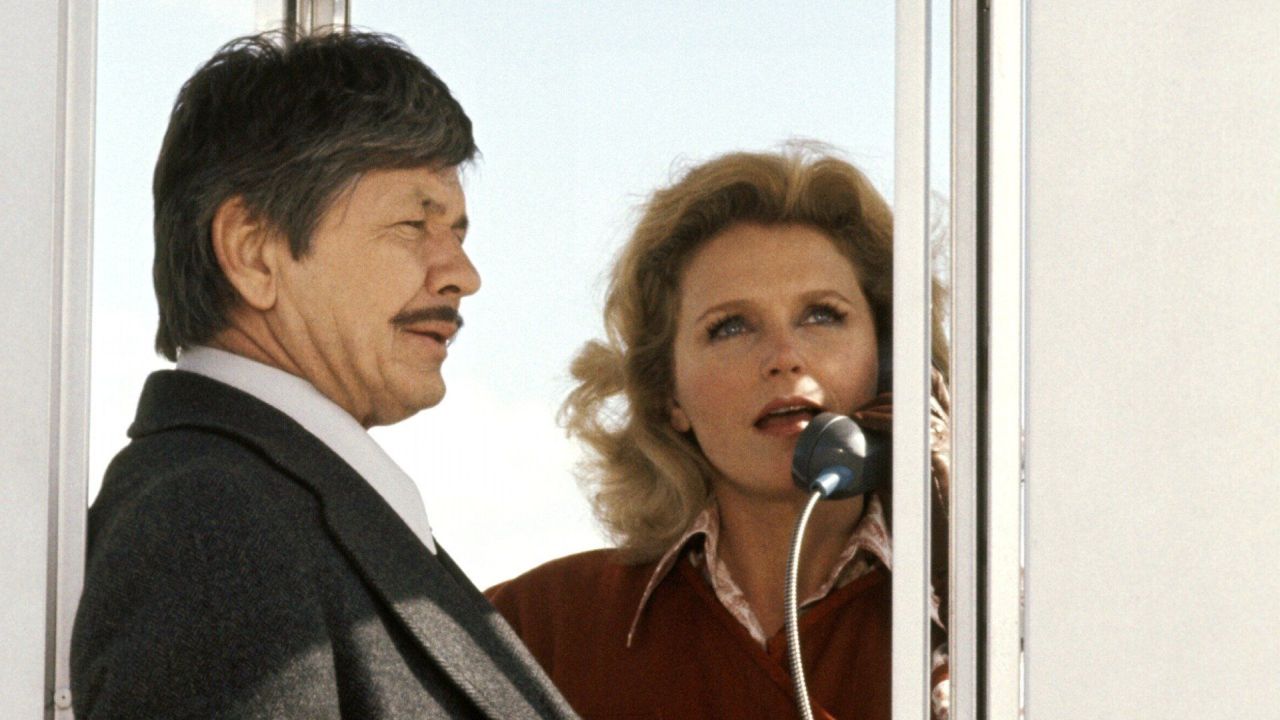
Plot: The United States and the Soviet Union are backing down from the Cold War, but not everyone is happy about it. Nicolai Dalchimsky (Donald Pleasence), a KGB agent, steals information regarding a secret Soviet operation that planted brainwashed intelligence agents all over America. When Dalchimsky uses those agents to blow up old military buildings, the Soviets send KGB operative Grigori Borzov (Charles Bronson) and a double agent (Lee Remick) to stop him before it’s too late.
KBZ’s Take: Telefon contains all the best elements of the Cold War that made so many subgenre films unique. It has a heroic KBG agent, a rouge KBG agent and a mysterious double agent. It has a far-fetched (yet plausible) conspiracy involving Soviet sleeper agents living in the U.S. that can be reactivated into mindless drones when hearing words from a Robert Frost poem. And it has a race against time as a befuddled CIA wonders why once important infrastructure (that now has no strategic value) is being blowing up by U.S. citizens.
Although the film has similarities to the premise of The Manchurian Candidate (1962), it’s a much different film relying on an exhilarating pace filled with action and suspense. It also has a great cast of established and up-and-coming actors of the 70’s with Charles Bronson, Donald Pleasance, Lee Remick and Tyne Daly. And it’s one of the first (and best) films of the subgenre that explored the détente period of the Cold War as tensions thawed between the West and Soviets.
Though the film received mixed reviews upon its release, over time, it has become one of the standouts of the subgenre in the 1970’s. It’s also a film we highly recommend and consider one of the lesser-known and underappreciated classics of the subgenre.
Where to Stream / Buy: https://amzn.to/3Ki9TpP