










Hard Sci-Fi films have an emphasis on science and incorporate scientific accuracy and logic. Though Hard Sci-Fi is a more obscure Sci-Fi genre, it often produces some of the best, award-winning Sci-Fi films. And though these subgenre films are science fiction, they’re noted for realistic portrayals of futuristic Sci-Fi concepts grounded in accurate scientific principles.
Hard Sci-Fi films are also counter to Soft Sci-Fi films and Space Operas. Hard Sci-Fi films will often focus on scientific areas of computer science, engineering, physics and math whereas Soft Sci-Fi films deal with more non-scientific areas such as politics, psychology and economics. Space Operas don’t focus on scientific accuracy and are often unrealistic (from a scientific perspective).
An example of a Hard Sci-Fi film would be The Martian (2015). The film is based on a novel of the same name by Andy Weir and Weir has noted how science drove the plot of the novel and the film. The Martian features many scientifically accurate elements including synthesizing water, growing potatoes on Mars and the time it would take to travel from Earth to the Red Planet.


Frank Herbert’s Dune novel and film adaptations – Dune (1984) and Dune (2021) – would be an example of Soft Sci-Fi. While Dune features some scientific concepts, it doesn’t focus on scientific accuracy and is much more about the politics between various factions (House Atreides & House Harkonnen) for control of spice production on Arrakis.
And Star Wars: Episode IV – A New Hope (1977) is a classic example of a Space Opera. While the film has some exciting adventures, weapons and space battles, almost all technical elements of Star Wars are not grounded in scientific reality or accuracy. One example would be the sound of laser blasts or explosions in space. These wouldn’t be ‘heard’ because there’s no air or oxygen in space. The Hard Sci-Fi film Gravity (2013) is much more representative of how these types of explosions would occur in space. And another example of scientific inaccuracy from Star Wars would be the Jedi’s lightsaber. There are multiple science-related issues with a lightsaber from the power required for such a device to somehow molding plasma into a sword-like device. You can read more about the scientific difficulties (and impossibilities) in creating a lightsaber here.
Films in the Hard Sci-Fi subgenre are most often found in the Sci-Fi Films About Space subgenre. However, they can also be found subgenres such as Films About AI, Films About Robots, Films About AR & VR, Future Noir Films, Time Travel Films, Time Loop Films, Films About The Multiverse and Techno Thrillers.
What are the Best Hard Sci-Fi Films? Read on as we look at some of the most popular films featuring realistic Sci-Fi concepts and technology from the last 50 years. This is our tenth “Best Of” subgenre list where we will rank the Top 20 films of the Hard Sci-Fi Films subgenre.
For our rankings, we had to use some simple criteria that defines a Hard Sci-Fi film. First, and easiest, the film should reside in the Sci-Fi genre. Though the films can contain non-fiction scientific elements, we want the focus to be based on futuristic concepts grounded in scientific reality.
Second, the more accurate the film is with its Hard Sci-Fi concepts, the higher we will rank the film. We’ll try to make note in our rankings where the film succeeds in showing the most realistic Hard Sci-Fi elements.
Third, we will make some exceptions for Soft Sci-Fi films that also incorporate Hard Sci-Fi concepts – even if the film has a greater emphasis on Soft Sci-Fi themes like politics. If the film uses some realistic Hard Sci-Fi, we’ll include it on our list.
And fourth, we had to follow our rule for all of KBZ’s film listings where we only list films that have a 4.0/10 or higher rating. We’ll also be focusing on films from 1968 to the present.
Our complete list of Hard Sci-Fi films features over 80+ films from 1968 – 2023. You can find just about every film featuring Hard Sci-Fi concepts and scientific elements in this collection. We’ll also create an article of lesser-known Hard Sci-Fi films in the near future, so subscribe to our newsletter if you want to be updated once we release additional articles or collections.
Best Hard Sci-Fi Films
Honorable Mentions: The Andromeda Strain (1971), Solaris (1972), Altered States (1980), Strange Days (1995), Cube (1997), Deep Impact (1998), A.I. Artificial Intelligence (2001), S1m0ne (2002), Solaris (2002), Children of Men (2006), The Fountain (2006), Sunshine (2007), The Man from Earth (2007), Looper (2012), Upstream Color (2013), The One I Love (2014), Predestination (2014), Uncanny (2015), Arrival (2016), Sound from the Deep (2017), Annihilation (2018), The Endless (2018), Clara (2018), Black Mirror: Bandersnatch (2018), Anon (2019), The Mandela Effect (2019), Synchronic (2020), Oxygen (2021) and Free Guy (2021).
Rank 20-1:
#20 Blade Runner (1982) Where to Stream / Buy: https://amzn.to/3AO0AsD
#19 Coherence (2013) Where to Stream / Buy: https://amzn.to/3HDbk0B
#18 Minority Report (2002) Where to Stream / Buy: https://amzn.to/44nrjd5
#17 Colossus: The Forbin Project (1970) Where to Stream / Buy: https://amzn.to/3Vvp6YV
#16 Contagion (2011) Where to Stream / Buy: https://amzn.to/3LTT4Tr
#15 The Abyss (1989) Where to Stream / Buy: https://amzn.to/3NAEkdp
#14 The Matrix (1999) Where to Stream / Buy: https://amzn.to/3NG1oYh
#13 Inception (2010) Where to Stream / Buy: https://amzn.to/40ZwLQn
#12 Her (2013) Where to Stream / Buy: https://amzn.to/3ntZKhG
#11 Primer (2004) Where to Stream / Buy: https://amzn.to/410u4hw
#10
Gattaca

Plot: In a future society in the era of indefinite eugenics, humans are set on a life course depending on their DNA. Young Vincent Freeman is born with a condition that would prevent him from space travel, yet is determined to infiltrate the GATTACA space program.
What it gets right (scientifically): Genetic Engineering
KBZ’s Take: Andrew Niccol is second only to Christopher Nolan when it comes to making Hard Sci-Fi films. Niccol has written some of the most memorable films of the subgenre including Gattaca, S1m0ne (2002) which covered Artificial Intelligence and Anon (2019) which featured the dangers of Augmented Reality.
Though Gattaca was released over 25 years ago, its concepts of genetic engineering were eerily accurate. Not only have advancements in genetics come closer to the fictional world of Gattaca, but the film’s social and legal implications of genetic engineering have guided academia and scientific policies regarding genomics and bioengineering.
Where to Stream / Buy: https://amzn.to/3ARH1j4
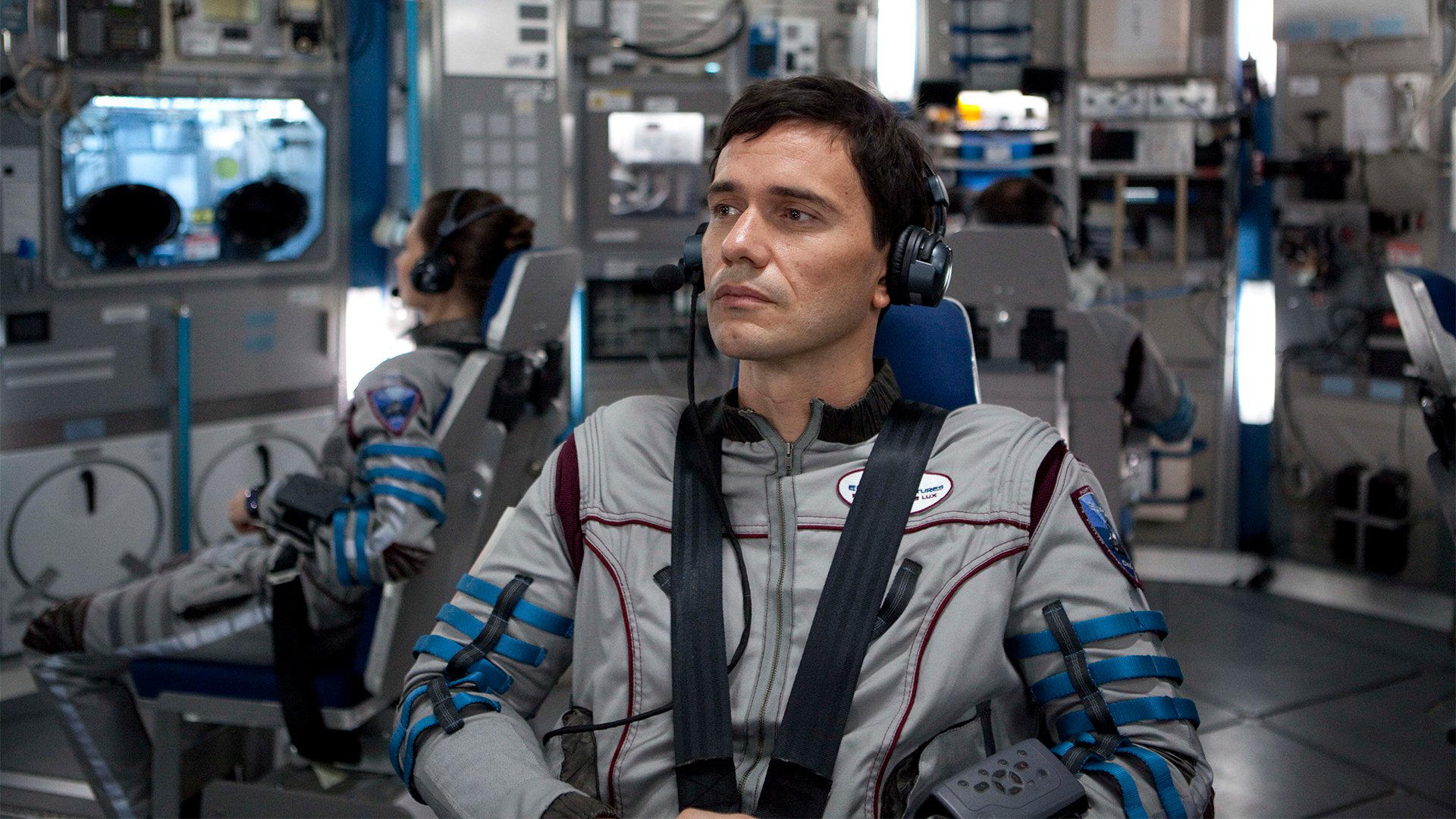
Plot: A crew of international astronauts are sent on a private mission to Jupiter’s fourth moon.
What it gets right (scientifically): Space travel to and physical conditions of Europa
KBZ’s Take: We’ll start off by saying if you’re a fan of Alien (1979) and more horror-based Sci-Fi films, you probably will not enjoy this film. It’s more akin to 2001: A Space Odyssey (1968) and Interstellar (2014) with its realistic portrayal of how a manned mission to Europa might look and feel. It falls much more within the Hard Sci-Fi realm though it also uses a Found Footage format that adds to the eventual tension and ‘discovery’.
From a Hard Sci-Fi perspective, the film gets many things right including electromagnetic radiation, landing on Europa and the surface conditions of Jupiter’s moon.
Additional Lists: Top Films Set in Space You Haven’t Seen #1
Where to Stream / Buy: https://amzn.to/3HlwUFU
#8
Tenet

Plot: Armed with only one word – Tenet – and fighting for the survival of the entire world, the Protagonist journeys through a twilight world of international espionage on a mission that will unfold in something beyond real time.
What it gets right (scientifically): Time Travel (theoretical)
KBZ’s Take: Back to the Future (1985) and The Terminator (1984) are some of the best films about Time Travel, but Tenet is #1 on our Best Time Travel Films list. First, it’s a Christopher Nolan film and like his other films dealing with theoretical Wormholes and Time Dilation in Interstellar (2014) or the science behind dreams in Inception (2010), Nolan takes a scientific approach to the control of entropy to allow for Time Manipulation. Like his other films, Nolan often uses the foundation of Hard Sci-Fi when he branches out into other film subgenres.
Second, Tenet is not a film that will be fully understood upon your first viewing. We saw the film 5 times before fully understanding all the nuances of the plot and how Time Travel (through Time Manipulation) functions within the film. Some might argue this actually takes away from the film, but we would argue the opposite – this is a film that takes Time Travel seriously and tries to relay how it might function in the real world.
The more you understand the film and how time flows from the start of the film to the end (and vice versa), the more you will appreciate just how amazing it is. For those of you still confused about the film and hesitant to give it a second watch, we would suggest reading a few articles that help explain the film in detail. That will make your subsequent journey into Tenet much easier and help you better understand all the Time Travel intricacies of this masterpiece.
Additional Lists: Best Time Travel Films #1
Where to Stream / Buy: https://amzn.to/3ELe9LT
#7
Moon

Plot: With only three weeks left in his three-year contract, Sam Bell is getting anxious to finally return to Earth. He is the only occupant of a Moon-based manufacturing facility along with his computer and assistant, GERTY. When he has an accident, however, he wakes up to find that he is not alone.
What it gets right (scientifically): Helium-3 Extraction (theoretical)
KBZ’s Take: Moon features quite a few Hard Sci-Fi elements – some which we can discuss and some we cannot (due to spoilers). The first we can discuss is GERTY – Sam’s AI assistant. Though GERTY comes off as typical AI we’ve seen in other Sci-Fi films, it’s the emotional support GERTY gives to Sam that is unique and close to AI models being developed today. Think of ChatGPT but friendlier with a more robust personality 😉
The other Hard Sci-Fi element is much more interesting (and controversial) – the film’s reason for Sam being on the moon in the first place – to mine and extract Helium-3. Though the extraction of Helium-3 as an abundant source of clean energy sounds utopian, there are proponents and skeptics to its feasibility. Either way, Moon is one of the better films that grounds both its narrative and environment in accurate scientific fundamentals.
Where to Stream / Buy: https://amzn.to/44nw06G
#6
Gravity

Plot: Dr. Ryan Stone (Sandra Bullock) is a medical engineer on her first shuttle mission. Her commander is veteran astronaut Matt Kowalsky (George Clooney), helming his last flight before retirement. Then, during a routine space walk by the pair, disaster strikes: The shuttle is destroyed, leaving Ryan and Matt stranded in deep space with no link to Earth and no hope of rescue. As fear turns to panic, they realize that the only way home may be to venture further into space.
What it gets right (scientifically): Space
KBZ’s Take: Though Gravity does trade some scientific inaccuracies for narrative elements, it’s still noted as one of the most scientifically accurate films about astronauts in outer space.
Where the film features some inaccuracies are with the orbiting debris, the orbits of the other space stations and some of the astronauts’ equipment. However, even these inaccuracies are based on actual science though some creative leeway was used to advance the plot. What the film does get right (according to actual astronauts) were the views of the Earth from space, the set designs of the space station and hyperrealism in the film.
Where to Stream / Buy: https://amzn.to/42khVoD
#5
Contact

Plot: Dr. Ellie Arroway (Jodie Foster) races to interpret a possible message originating from the Vega star system. Once first contact with an extraterrestrial intelligence is proven, Arroway contends with restrictive National Security Advisor Kitz (James Woods) and religious fanatics bent on containing the implications of such an event. An incredible message is found hidden in the signal, but will Arroway be the one to answer its call?
What it gets right (scientifically): SETI
KBZ’s Take: What Contact gets right (almost to a fault) is the role of SETI (Search for Extraterrestrial Intelligence). From how SETI performs their searches for alien signals to how they speak to each other, Contact provides moviegoers with a glimpse into the unique life of these obscure scientists.
The film is based on the novel of the same name by Carl Sagan who himself was also an astronomer and astrophysicist. So, you can expect a good amount of Hard Sci-Fi grounded in scientific reality from his works. And Director Robert Zemeckis does just that by taking very few creative vs. technical tradeoffs for one of the best (and most accurate) films of the subgenre.
Where to Stream / Buy: https://amzn.to/3APbyxR
#4
The Martian

Plot: During a manned mission to Mars, Astronaut Mark Watney is presumed dead after a fierce storm and left behind by his crew. But Watney has survived and finds himself stranded and alone on the hostile planet. With only meager supplies, he must draw upon his ingenuity, wit and spirit to subsist and find a way to signal to Earth that he is alive.
What it gets right (scientifically): Mars
KBZ’s Take: As we mentioned earlier in this article, The Martian features many scientifically accurate elements including synthesizing water, growing potatoes on Mars and the time it would take to travel from Earth to the Red Planet.
Like other films of the subgenre, the film also takes some creative liberties with scientific accuracy including the major storm on Mars (where Watney gets lost) and some of the portrayals of gravity (which is one third the gravity of earth). This article has a list and explanations of most of the main accurate and inaccurate elements in the film.
While there have been numerous films about Mars – Mission to Mars (2000), Red Planet (2000) and The Last Days on Mars (2013) being the most well-known films – none have come close to depicting the scientific accuracy of The Martian.
Where to Stream / Buy: https://amzn.to/421IHSX
#3
Ex Machina

Plot: Caleb, a coder at the world’s largest internet company, wins a competition to spend a week at a private mountain retreat belonging to Nathan, the reclusive CEO of the company. But when Caleb arrives at the remote location, he finds that he will have to participate in a strange and fascinating experiment in which he must interact with the world’s first true artificial intelligence, housed in the body of a beautiful robot girl.
What it gets right (scientifically): Artificial Intelligence
KBZ’s Take: When watching Ex Machina, it’s easy to get distracted by the robotic body of Ava (Alicia Vikander) and the performances of Vikander, Domhnall Gleeson and Oscar Isaac. The film mainly features these three main actors, and they all give amazing performances throughout the film.
What is more intriguing (from a Hard Sci-Fi perspective) is the accuracy in AI development and the administration of the Turing Test. While the film does a great job explaining what the Turing Test is to non-technical filmgoers, where it excels is with the deeper implications of the Turing Test – to see if Ava can convince Gleeson’s character that she is not only human but a female. It’s one aspect of the film that makes it not only one of the best Films About Artificial Intelligence but also one of the best Hard Sci-Fi films.
Where to Stream / Buy: https://amzn.to/3nlYr4m

Plot: Humanity finds a mysterious object buried beneath the lunar surface and sets off to find its origins with the help of HAL 9000, the world’s most advanced supercomputer.
What it gets right (scientifically): Space, Aerospace Engineering, Artificial Intelligence
KBZ’s Take: Though 2001: A Space Odyssey is often ranked as the most scientifically accurate movie of all-time, we feel it’s more of a 1B to our 1A selection.
For a film that’s now almost 55 years old, it’s amazing how much 2001 got right – from the designs of the spacecraft to outer space to the most infamous AI of time – HAL. It helps that the film is based on the novel by Arthur C. Clarke and Clarke himself co-wrote the screenplay. Clarke was one of the premiere writers of Hard Sci-Fi and his involvement (with Director Stanley Kubrick) in 2001, helped inspire future films of the subgenre.
As for the film’s accuracy, you can find lists of those all over the internet, but we like Wikipedia’s list the best. What we found most humorous from this page is that one of the inaccuracies in the film involves an astronaut holding his breath before exposure to the vacuum of space. Holding breath in instead of exhaling would have caused the astronaut’s lungs to rupture. Clarkes says of this error that had he been on the set that day, he would have caught the error. This shows Clarke’s dedication to the accurate side of science fiction and why 2001 is still a classic film of the subgenre after five decades.
Where to Stream / Buy: https://amzn.to/3LtGt7V
#1
Interstellar

Plot: The adventures of a group of explorers who make use of a newly discovered wormhole to surpass the limitations of human space travel and conquer the vast distances involved in an interstellar voyage.
What it gets right (scientifically): Black Holes
KBZ’s Take: When Christopher Nolan tackles a subgenre and their respective themes, you can be rest assured he will go to great lengths to have a solid scientific foundation for his ideas. And that is what he’s done with Space Travel and Time in Interstellar, Time Manipulation in Tenet and with Neuroscience in Inception. All three films that made our list of the Best Hard Sci-Fi films.
You can tell right away with Interstellar that an exhaustive amount of research went into the film specific to Wormholes, Time Dilation, and Black Holes (that posit the film’s theory for Time Travel). It’s a reason why it’s known as one of the most scientifically accurate films of all time – especially within the Hard Sci-Fi subgenre.
As for the Time Travel aspects found within the film, not only are they shown in a unique and visual way, but they’re also discussed throughout. And as for the theme of Time Travel – it’s a film that uses the science behind Time Travel for an emotional and bittersweet outcome.
Additional Lists: Best Time Travel Films #6
Where to Stream / Buy: https://amzn.to/3kypTu6